Robot Learns Realistic Lip Movements by Observation

Robot Learns Realistic Lip Movements by Observation

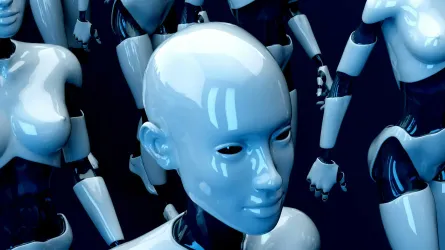
The Robot That Learned to Talk Like a Human (and Finally Stopped Looking Creepy) When you watch a video of a humanoid robot trying to say “hello,” you’ve probably seen the same old nightmare: a stiff, plastic‑jawed puppet that opens its mouth at the wrong time, or a mechanical “B‑b‑b” that looks like a bad karaoke rendition of a robot‑themed pop song. It’s the visual equivalent of hearing a voice‑over that’s a few frames out of sync – unsettling enough to make you glance away, yet oddly fascinating because you can’t help wondering how far we’re from a machine that actually talks to us. ...

January 17, 2026 · 10 min · TechLife
Software and AI News Roundup January 2026

The Week AI Went Into Overdrive: Software and AI News Roundup (January 12-13, 2026)

If you blinked this week, you probably missed about seventeen major announcements in the tech world. Seriously, January 12-13, 2026, felt like someone accidentally hit the fast-forward button on the entire industry. We’ve got tech giants holding hands, robots learning new tricks, hackers getting hacked (oh, the irony), and enough security vulnerabilities to keep your IT department up at night. Grab your coffee — or maybe something stronger — because we’re diving deep into everything that happened. And trust me, there’s a lot to unpack. ...

January 13, 2026 · 12 min · TechLife
Daily AI News Roundup 09 January 2026

Daily AI News Roundup: 09 Jan 2026

Nous Research’s NousCoder-14B is an open-source coding model landing right in the Claude Code moment Nous Research, backed by crypto‑venture firm Paradigm, unveiled the open‑source coding model NousCoder‑14B, which was trained in just four days on 48 Nvidia B200 GPUs and reaches a 67.87 % accuracy on the LiveCodeBench v6 benchmark—about 7 percentage points higher than its base model, Alibaba’s Qwen3‑14B. The release includes not only the model weights but also the full Atropos reinforcement‑learning environment, benchmark suite and training harness, allowing anyone with sufficient compute to reproduce or extend the work. Training leverages “verifiable rewards” (binary pass/fail on executed code), dynamic‑sampling policies, and progressive context‑window expansion up to roughly 80 k tokens, while pipelining inference and verification to maximize GPU utilization. Researchers note that the 24 000 competitive‑programming problems used for training exhaust most high‑quality public data in the domain, prompting calls for synthetic problem generation and self‑play to overcome future data scarcity. With $65 million in funding, Nous Research positions its open‑source approach as a direct competitor to proprietary tools like Anthropic’s Claude Code, emphasizing transparency, reproducibility, and the next‑generation research directions of multi‑turn RL and autonomous problem creation. ...

January 9, 2026 · 8 min · TechLife
Weekly AI News Roundup January 2026

Weekly AI News Roundup: The 5 Biggest Stories (January 1-7, 2026)

Happy New Year, everyone! If you thought 2025 was wild for artificial intelligence, the first week of 2026 just looked at the calendar and said, “Hold my beer.” We are only seven days into the year, and we’ve already seen enough major announcements to fill a whole quarter. CES 2026 in Las Vegas has been an absolute whirlwind, and combined with some massive regulatory shifts and research breakthroughs, it’s clear that this year isn’t going to be about incremental updates. We’re talking fundamental shifts in how AI is built, deployed, and governed. ...

January 7, 2026 · 5 min · TechLife
Microscopic robot perched on a fingerprint ridge, illustrating its sub‑salt size

Microscopic Autonomous Robots Smaller Than a Grain of Salt

Have you ever looked at a single grain of salt and thought, “I bet I could fit a whole computer in there”? Probably not. But scientists at the University of Pennsylvania just did exactly that—and then they made it move. In what feels like a massive leap toward the sci-fi future we’ve been promised, researchers have developed microscopic robots that aren’t just small; they are autonomous. They can think, sense their environment, and make decisions without being tethered to a giant control system. ...

January 6, 2026 · 3 min · TechLife
Robot bartender mixes drinks at Las Vegas Golden Knights games

Robot Bartender Serves Up a Taste of the Future

Key Highlights Innovative Solution: ADAM, a robot developed with NVIDIA Isaac libraries, is pouring drinks and turning heads at the T-Mobile Arena in Las Vegas. Real-World Impact: ADAM addresses labor shortages and demands for unique customer experiences in the hospitality industry. Technological Advancements: ADAM’s development showcases the potential of robotics and AI in transforming various industries. Imagine attending a hockey game and being served a perfectly crafted drink by a robot. This is now a reality at the T-Mobile Arena in Las Vegas, where ADAM, the Automated Dual Arm Mixologist, is wowing fans with its skills. But ADAM is more than just a novelty - it’s a solution to real-world challenges in the hospitality industry. With the help of NVIDIA’s Isaac platform, Richtech Robotics has developed a scalable and consistent solution that creates memorable moments for customers. ...

December 13, 2025 · 3 min · TechLife
NVIDIA's new open-source AI technologies

NVIDIA Unveils New Open-Source AI Tech

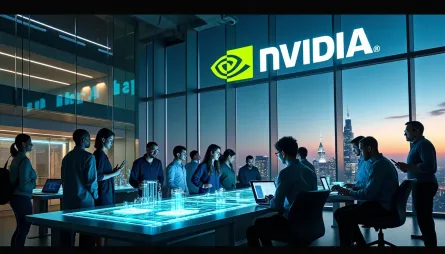
As the AI landscape continues to evolve, NVIDIA is furthering its commitment to open-source technologies, unveiling new models for language, robotics, and biology. This move reflects broader industry trends towards democratizing access to AI and fostering innovation. By contributing to the open ecosystem, NVIDIA aims to empower developers worldwide and drive economic growth through efficient reasoning, high-fidelity world generation, and interactive physical AI systems. The new open models, data, and tools are part of the NVIDIA Nemotron family for AI reasoning, NVIDIA Cosmos platform for physical AI, NVIDIA Isaac GR00T for robotics, and NVIDIA Clara for biomedical AI. These technologies will be made available through Hugging Face, a leading platform for AI model sharing and collaboration. As a top contributor to Hugging Face, NVIDIA has already made over 650 open models and 250 open datasets available, expanding access to cutting-edge AI resources for the global developer community. ...

October 28, 2025 · 2 min · TechLife