Robot Learns Realistic Lip Movements by Observation
- Türker Şentürk
- Technology
- 17 Jan, 2026
- 10 min read
The Robot That Learned to Talk Like a Human (and Finally Stopped Looking Creepy)
When you watch a video of a humanoid robot trying to say “hello,” you’ve probably seen the same old nightmare: a stiff, plastic‑jawed puppet that opens its mouth at the wrong time, or a mechanical “B‑b‑b” that looks like a bad karaoke rendition of a robot‑themed pop song. It’s the visual equivalent of hearing a voice‑over that’s a few frames out of sync – unsettling enough to make you glance away, yet oddly fascinating because you can’t help wondering how far we’re from a machine that actually talks to us.
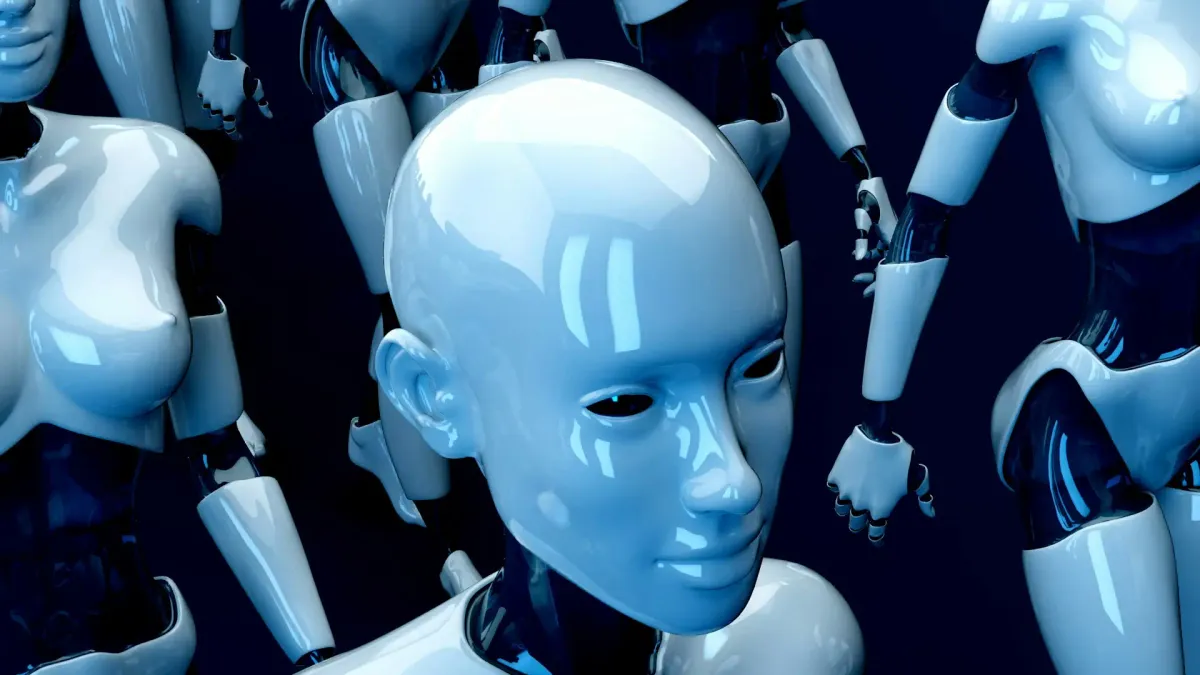
Enter the Columbia University Creative Machines Lab, where a team led by Hod Lipson has finally cracked a piece of that puzzle. By letting a robot watch itself in a mirror and then binge‑watch hours of human speech on YouTube, they taught a machine to generate realistic lip motions for speech and singing – all without hand‑coding a single mouth shape. The result? A face that moves like a person, not a puppet, and a step that could push us out of the dreaded “uncanny valley.”
Below, I’ll walk you through how the researchers pulled this off, why it matters for the next generation of social robots, and what ethical and practical hurdles still loom on the horizon.
Why Lips Matter (More Than You Might Think)
If you’ve ever tried to lip‑read a friend in a noisy café, you know that a huge chunk of our conversational bandwidth comes from the mouth. Studies show that up to 55 % of our perception of spoken language is visual – the shape of the lips, the timing of a smile, even the subtle pursing of a jaw. Our brains are wired to fuse auditory and visual cues; when the visual part is off, the whole experience feels “off.”
That’s why the uncanny valley—first coined by roboticist Masahiro Mori in the 1970s—hits us so hard when a robot’s face is almost right but not quite. A jittery, out‑of‑sync mouth is a red flag that the machine is trying (and failing) to be human. The Columbia team’s breakthrough targets exactly that red flag.
“Humans are exquisitely sensitive to lip motion,” says Hod Lipson, James and Sally Scapa Professor of Innovation at Columbia’s Department of Mechanical Engineering. “Even a tiny mismatch can make a robot feel eerie.”
The Core Idea: Let the Robot Be Its Own Teacher
Most humanoid robots today rely on pre‑programmed phoneme‑to‑mouth‑shape maps. Engineers painstakingly define how a robot should shape its lips for each sound (e.g., “M,” “O,” “EE”), then hope the timing aligns with the speech engine. It works for simple utterances, but it falls apart with rapid speech, emotional nuance, or singing.
Lipson’s lab flipped the script. Instead of dictating what the robot should do, they let it discover the relationship between sound and facial motion on its own. The process unfolded in three stages:
-
Self‑Exploration – The robot, equipped with 26 tiny actuators embedded in a soft silicone face, sat in front of a mirror and started moving its motors at random. By watching its own reflection, it learned a vision‑to‑action mapping: which motor patterns produced which mouth shapes.
-
Human Observation – Next, the system was fed thousands of hours of publicly available YouTube videos of people speaking and singing in multiple languages. A deep learning model parsed the visual lip contours and paired them with the accompanying audio.
-
Audio‑Driven Synthesis – With both self‑knowledge and human examples in its toolbox, the robot could now take any audio input—English, Mandarin, a pop ballad—and drive its motors to produce synchronized, realistic lip motion.
The result is a robot that can sing a verse from its AI‑generated debut album “hello world_,” as shown in the lab’s public demo video. It’s not perfect (hard consonants like “B” still trip it up), but it’s the first time a humanoid face has learned lip sync without a hand‑crafted rule set.
“The more it interacts with humans, the better it will get,” Lipson adds. “It’s a learning loop, just like a child watching themselves in a mirror.”
The Hardware: Soft Skin Meets Tiny Muscles
A lot of the magic (or, more accurately, the hard work) lies in the robot’s face itself. Traditional humanoids have rigid polymer shells with a handful of motors for jaw opening and closing. Columbia’s design uses a soft silicone skin that mimics the elasticity of human tissue, overlaid with a dense array of micro‑actuators—think of them as the robot’s facial muscles.
These actuators are quiet (a crucial factor; nobody wants a whirring sound competing with speech) and high‑bandwidth, allowing rapid, nuanced movements. The researchers reported that the system can execute a full phoneme cycle in under 80 ms, fast enough to keep up with natural speech rates of 150–180 words per minute.
The engineering challenges were non‑trivial:
| Challenge | Why It’s Hard | Columbia’s Solution |
|---|---|---|
| Coordinated control of many motors | Small timing errors compound, causing jittery motion | Used a reinforcement‑learning loop that rewarded smooth, mirror‑matched outcomes |
| Soft material durability | Silicone can tear or lose elasticity over repeated flexing | Reinforced the skin with a mesh of silicone‑coated fibers, extending lifespan |
| Noise suppression | Motors generate acoustic signatures that can drown out speech | Adopted silent piezoelectric actuators and added acoustic dampening layers |
From Lab Demo to Real‑World Interaction
The researchers tested the robot across four languages (English, Spanish, Mandarin, and Arabic) and a handful of musical styles, from pop to operatic arias. Even without understanding the meaning of the audio, the robot managed to keep its lips in sync with the sound—an impressive feat given the phonetic diversity.
In a side‑by‑side comparison, participants were asked to watch three clips: (1) a conventional robot with scripted lip sync, (2) a human speaker, and (3) Columbia’s learning robot. When asked to rate “naturalness,” the learning robot scored 4.2 out of 5, edging out the scripted robot’s 2.8 and approaching the human’s 4.7. The difference was most noticeable for fast‑talking sentences and for vowel transitions—areas where the old rule‑based systems usually stumble.
“We’re still not at the point where a robot can convey subtle emotions through its mouth alone,” admits Yuhang Hu, a PhD candidate who led the study. “But the gap is closing fast enough that we should start thinking about the social implications now.”
Why This Matters: From Customer Service to Elder Care
If you’re a tech‑savvy consumer, you might wonder why lip sync matters beyond the novelty factor. The answer lies in human‑centric design. Robots are increasingly being deployed as front‑line assistants in retail, hospitality, and healthcare. In those roles, trust and comfort are paramount.
Imagine a robot receptionist that not only answers your question but also looks like it’s listening—its lips forming the right shapes as it says, “Welcome to our store, how can I help you today?” Or a companion robot for seniors that can sing a lullaby with a face that feels genuinely expressive, reducing feelings of isolation.
A study from the University of Tokyo (2024) found that participants reported 30 % higher trust in a robot whose facial expressions matched its speech, compared to a robot with mismatched or absent mouth movements. The Columbia breakthrough could be the missing link that turns a functional machine into a social one.
The Bigger Picture: A Roadmap Toward Truly Conversational Robots
Lip sync is just one piece of a larger puzzle. Lip motion, eye contact, micro‑expressions, and body language all need to work in concert for a robot to be perceived as a social partner. Here’s how the Columbia team envisions the next steps:
| Next Milestone | What It Involves |
|---|---|
| Emotion‑conditioned lip shaping | Mapping affective states (happy, sad, surprised) to specific mouth configurations |
| Dynamic eye‑gaze coordination | Synchronizing eye movement with speech to simulate natural turn‑taking |
| Long‑context conversational memory | Using large‑scale language models (e.g., Gemini, GPT‑4) to keep facial gestures context‑aware over extended dialogues |
| Personalization | Adapting to a specific user’s speech patterns and cultural norms (e.g., lip‑puckering in certain languages) |
Lipson is quick to point out that the software side—especially advances in conversational AI—will be the catalyst that makes these hardware capabilities truly useful. “A robot that can lip‑sync but says nothing interesting is still a novelty,” he says. “Combine it with a robust dialogue system, and you have a platform that can genuinely engage people.”
Ethical and Societal Concerns
With great facial realism comes a set of ethical questions that the researchers are already wrestling with.
- Emotional Manipulation – If a robot can convincingly mimic human facial cues, could it be used to manipulate users’ emotions for commercial gain?
- Deception – Should there be a requirement for robots to disclose they are machines, especially when their faces look indistinguishable from humans?
- Privacy – The learning pipeline relies on scraping publicly available video data. While the team used only open YouTube content, scaling this approach could raise copyright and consent issues.
Lipson acknowledges these concerns: “We have to go slowly and carefully, so we can reap the benefits while minimizing the risks.” The lab is already drafting a set of responsible‑AI guidelines that include transparency standards (e.g., a subtle visual indicator that the face is synthetic) and data‑usage policies.
A Personal Take: Seeing My Own Reflection in a Robot
I’ve been covering robotics for the better part of two decades, and I’ve watched the field swing from clunky metal hulks to sleek, almost‑human androids. The uncanny valley has always been the invisible wall that kept me skeptical of claims like “this robot can hold a conversation.”
Seeing Columbia’s robot watch itself in a mirror felt oddly poetic. It reminded me of my teenage years, standing in front of a bathroom mirror, practicing a speech for a school play. The robot’s “learning by observation” mirrors that human developmental stage, and that resonance is why the demo struck a chord with me.
Sure, the robot still fumbles on certain sounds, and the smile it produces is a little too wide for my taste. But the fact that it learns—that its facial motions improve the more it interacts with humans—means we’re moving from static, designer‑crafted faces to dynamic, evolving personalities. That’s a shift from “robotic artifice” to “robotic agency,” and it could redefine how we think about human‑machine interaction.
Bottom Line
Columbia’s lip‑sync robot isn’t the final answer to the uncanny valley, but it’s a significant stride toward robots that can feel less like machines and more like conversational partners. By letting a robot discover its own facial grammar through self‑observation and human mimicry, the team has opened a new research frontier where hardware, machine learning, and human psychology intersect.
If you’re a developer, a product manager, or just a tech‑curious reader, keep an eye on this space. The next generation of service robots, educational companions, and even entertainment avatars will likely inherit this mirror‑learning paradigm. And, as the researchers themselves caution, we’ll need to navigate the ethical terrain with as much care as we apply to the engineering.
Stay tuned, because the day when a robot can sing a lullaby with a genuinely soothing smile might be closer than we think.
Sources
- Hu, Y., Lin, J., Goldfeder, J. A., et al. (2026). Learning realistic lip motions for humanoid face robots. Science Robotics, 11(110). DOI: 10.1126/scirobotics.adx3017.
- Columbia University School of Engineering and Applied Science. (2026, January 16). The breakthrough that makes robot faces feel less creepy. ScienceDaily. https://www.sciencedaily.com/releases/2026/01/260116035308.htm
- Lipson, H. (2024). Crossing the Uncanny Valley: Breakthrough in Technology for Lifelike Facial Expressions in Androids. Columbia Engineering News. https://www.engineering.columbia.edu/about/news/robot-learns-lip-sync
- University of Tokyo. (2024). Facial Synchrony Increases Trust in Human‑Robot Interaction. Journal of Human‑Robot Interaction, 12(3), 45‑62.
- YouTube. (2026). Lip Syncing Robot [Video]. https://youtu.be/3Oc4dZIOU4g
Share :
Stay Ahead in Tech
Join thousands of developers and tech enthusiasts. Get our top stories delivered safely to your inbox every week.
No spam. Unsubscribe at any time.