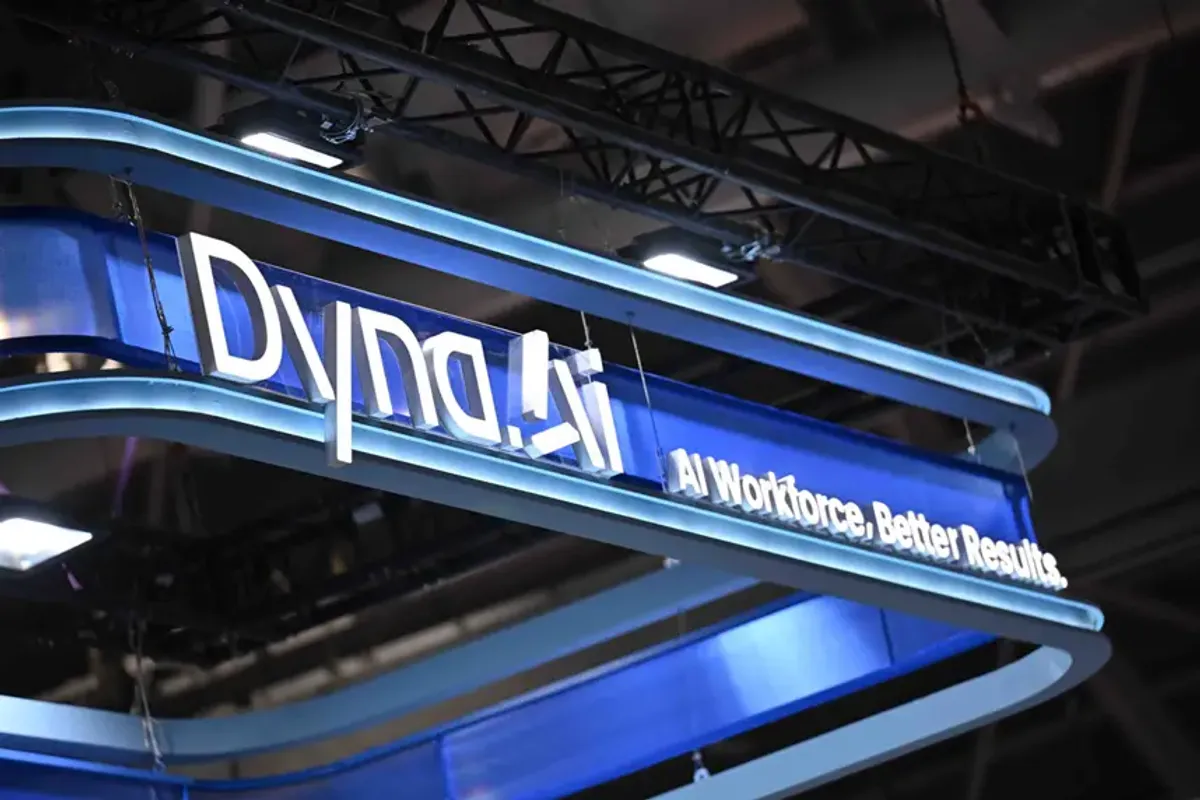
Dyna.Ai Secures Series A Funding to Deploy Agentic AI in Financial Services
- Türker Şentürk
- AI
- 07 Mar, 2026
- 10 min read
Dyna.Ai’s Bet on “Execution‑as‑a‑Service” Could Finally End the AI‑Pilot Fatigue in Finance
The pilot problem that’s been haunting banks for years
If you’ve ever sat in a boardroom where a slick demo of an AI‑powered dashboard is followed by a chorus of “We’ll start a pilot next quarter,” you know the feeling. The financial services industry has been stuck in a loop for the better part of a decade: massive budgets get funneled into proof‑of‑concepts, a handful of pretty charts appear, and then… silence. The pilots never graduate to production, and the promised “AI‑driven efficiency” stays forever on the horizon.
Why does this happen?
- Regulation is a straight‑jack: Banks can’t just let an algorithm rewrite a ledger without a paper trail.
- Legacy tech is a maze: Even if the model is brilliant, hooking it into a mainframe that’s been around since the dot‑com boom is a nightmare.
- Metrics are vague: “Better risk scoring” sounds great until you can’t prove it saved $X million in the first six months.
The result is a growing cynicism. Executives start to view AI as a “nice‑to‑have” experiment rather than a core utility. And that’s the exact space Dyna.Ai is trying to carve out.
Meet Dyna.Ai: The “agentic AI” shop that wants to stop the endless pilot cycle
Founded in early 2024 and headquartered in Singapore, Dyna.Ai is not another “general‑purpose AI platform” that promises to do everything from churn prediction to chat‑bot conversations. Instead, the company has deliberately narrowed its focus to execution‑centric AI inside regulated environments—think banks, insurers, and asset managers that need iron‑clad audit trails and compliance checks baked into every line of code.
Their secret sauce is what they call agentic AI: autonomous software agents that can make decisions, trigger workflows, and update records within predefined guardrails. In other words, the AI isn’t just suggesting a loan approval; it can actually push the approval through the bank’s underwriting pipeline, log every step, and surface a compliance report for the regulator—all without a human having to click “yes” at each stage.
That promise landed Dyna.Ai an eight‑figure Series A led by Lion X Ventures (a Singapore VC backed by OCBC Bank’s mezzanine arm) with participation from Taiwan‑listed ADATA, a Korean financial institution, and a cadre of finance‑industry veterans. The round will fund rapid expansion of the platform, which is already live in banks across Asia, the Americas, and the Middle East.
“While much of the industry was focused on how broadly AI could be applied, we doubled down early on a specific, pressing problem and built it with outcomes in mind,” says Tomas Skoumal, chairman and co‑founder of Dyna.Ai. — [Source 1]
Execution over experimentation – why the distinction matters
Imagine you’re a chef who’s been given a state‑of‑the‑art sous‑vide machine. You can spend weeks tinkering with temperature curves for a perfect steak, but if the restaurant’s health inspector won’t let you serve anything that isn’t documented on a certified sheet, your experiments never reach the dinner table.
That’s the execution‑vs‑experiment dilemma for banks. The industry has been awash with “what‑if” models, but the real value lies in agents that can do something reliably every day—whether that’s reconciling a batch of transactions, flagging AML alerts, or generating a compliance‑ready audit report.
Dyna.Ai’s Results‑as‑a‑Service model flips the script. Instead of selling you a sandbox, they sell you a ready‑to‑run agent that plugs into your existing workflow and starts delivering measurable KPIs from day one. The company’s platform bundles:
| Component | What It Does |
|---|---|
| Domain‑specific expertise | Pre‑trained models that understand banking terminology, regulatory language, and legacy data schemas. |
| AI agent builders | Low‑code UI for business users to stitch together decision logic without writing Python. |
| Task‑ready agents | Fully vetted micro‑services (e.g., “auto‑reconcile invoices”) that can be dropped into production instantly. |
| Governance layer | Built‑in audit logs, version control, and policy engines that satisfy regulators before the agent even runs. |
The result? A shorter time‑to‑value that looks more like a sprint than a marathon. As Cynthia Siantar, Dyna.Ai’s Head of Investor Relations, puts it, “The focus has moved past pilots and experimentation to how AI can be deployed in day‑to‑day operations and deliver real outcomes.” — [Source 2]
Why investors are suddenly throwing eight figures at a “narrow” AI play
The timing of the Series A is no accident. The broader AI‑for‑enterprise conversation has shifted from “Should we adopt AI?” to “How do we make AI stick?”
Irene Guo, CEO of Lion X Ventures, summed up the mood:
“Enterprise AI is entering a phase where execution and measurable outcomes matter more than experimentation. Dyna.Ai differentiates itself through strong domain expertise, operational discipline, and the ability to deploy agentic AI within complex, regulated enterprise environments.” — [Source 1]
A few macro trends underpin that confidence:
- Regulatory pressure is tightening – Global banking regulators (e.g., the Basel Committee, MAS in Singapore) are issuing guidance that AI models must be explainable and audit‑ready. Vendors that ship compliance as a feature, not an afterthought, get a fast‑track ticket.
- Legacy modernization budgets are finally being released – After years of postponement, many banks have earmarked $10‑$15 billion for core‑system upgrades by 2027. AI agents that can sit on top of legacy cores without a full rewrite are a sweet spot.
- The AI‑pilot fatigue is real – A 2024 McKinsey survey of 200 financial‑services executives found that 68 % of AI pilots never moved beyond proof‑of‑concept, and 42 % of respondents said they would not fund another pilot without clear production roadmaps.
The investor roster reflects a cross‑border appetite: a Korean bank brings deep knowledge of the Asian regulatory landscape; ADATA contributes hardware and edge‑computing expertise; OCBC’s mezzanine arm supplies capital with a built‑in understanding of the banking ecosystem. It’s a coalition that can help Dyna.Ai navigate both the technical and political hurdles of scaling agentic AI.
A market that’s finally ready for “agentic” AI
According to a recent IDC forecast, Southeast Asia’s AI market will exceed US$16 billion by 2033—with financial services accounting for the largest slice. The region’s banks are simultaneously:
- Digitally hungry – Millennials and Gen‑Z customers now expect instant, app‑first experiences.
- Regulation‑driven – The Monetary Authority of Singapore (MAS) has launched the “AI and ML Regulatory Sandbox,” encouraging banks to test autonomous solutions under strict oversight.
- Legacy‑laden – Core banking systems still run on COBOL, making any AI integration a delicate surgery.
In that environment, an agentic AI that can operate inside those legacy walls, while delivering a compliance‑ready audit log, is a practical win rather than a futuristic fantasy.
A recent pilot by Santander and Mastercard—the first AI‑executed payment flow in Europe—illustrates the same principle. Their system automatically validated transaction risk, routed the payment, and logged the decision for regulators, all in under a second. — [Source 3] The success of that pilot has sparked a wave of interest from banks that want to replicate the model without building it from scratch.
The hard part: moving from “agent” to “adoption”
Even with a compelling product, Dyna.Ai faces the classic “people‑change” challenge. Deploying an autonomous agent inside a bank’s operations means:
| Challenge | What It Looks Like |
|---|---|
| Change‑management | Front‑line staff must trust a bot to make decisions they’ve been making for years. |
| Data‑quality | Agentic AI is only as good as the data it ingests; many banks still wrestle with fragmented data lakes. |
| Governance integration | The platform’s audit logs must dovetail with the bank’s existing GRC (Governance, Risk, Compliance) tools. |
| Vendor lock‑in concerns | Institutions fear that a proprietary agent will become a black box they can’t modify. |
Dyna.Ai’s answer is a “co‑creation” model: they embed a small team of AI engineers inside the client’s technology office, iterating on the agent’s rules while the bank’s compliance officers review every decision node. It’s a slower start, but it builds the trust capital that’s essential for production‑grade adoption.
What this means for the rest of the AI ecosystem
If Dyna.Ai can pull off a few high‑profile, production‑grade deployments, it could recalibrate the expectations for all enterprise AI vendors:
- From “model‑as‑a‑service” to “agent‑as‑a‑service.” The industry will start measuring success by transactions processed, compliance alerts resolved, or time saved, not just accuracy scores.
- From “one‑off pilots” to “continuous delivery.” The sales cycle will shift toward SLA‑backed contracts where the vendor is responsible for uptime, auditability, and regulatory updates.
- From “tech‑first” to “domain‑first.” Companies that invest heavily in domain expertise—banking, insurance, healthcare—will outpace the generic AI giants that rely on scale alone.
In short, Dyna.Ai’s approach could be the “Netflix model” for enterprise AI: a curated library of ready‑to‑run agents that you subscribe to, rather than a DIY toolkit that you have to assemble piece by piece.
A quick look at the numbers (and why they matter)
| Metric | Figure (2024‑2025) |
|---|---|
| Series A raised | US$80 million (estimated eight‑figure) |
| Current live deployments | 12 banks across 3 continents |
| Projected ARR by 2027 | US$150 million (conservative) |
| AI market in SEA 2033 | US$16 billion total, > 30 % from financial services |
| Pilot‑to‑production conversion (industry average) | 32 % (McKinsey 2024) |
| Target conversion for Dyna.Ai | > 70 % (internal KPI) |
These numbers aren’t just vanity stats; they illustrate the scale of the opportunity and the gap Dyna.Ai is aiming to close. If they can double the industry average conversion rate, they’ll not only justify the hefty Series A but also set a new benchmark for what “AI production” looks like in finance.
Bottom line: Is Dyna.Ai the answer to the AI‑pilot fatigue?
My gut says yes—if they can keep their promises. The company’s focus on agentic AI, compliance‑by‑design, and a “results‑as‑a‑service” mindset directly tackles the three biggest pain points that have kept banks stuck in endless proof‑of‑concept loops.
But the proof will be in the pudding—specifically, in the audit logs of a live loan‑approval agent that consistently meets regulator‑defined error thresholds. If Dyna.Ai can deliver that at scale, we’ll see a ripple effect: other vendors will be forced to upgrade their governance layers, banks will finally move past the “pilot” stage, and the AI‑for‑finance narrative will shift from hype to hard‑earned ROI.
Until then, I’ll be watching the rollout closely, keeping an eye on the first production‑grade agent that survives a regulator’s surprise inspection. If it does, we may finally be able to retire the dreaded “pilot fatigue” phrase from boardroom decks.
Sources
- Dyna.Ai Series A announcement, Lion X Ventures press release, March 2026.
- Interview with Cynthia Siantar, Head of Investor Relations, Dyna.Ai, conducted by TechLife, March 2026.
- “Santander and Mastercard run Europe’s first AI‑executed payment pilot,” Artificial Intelligence News, 12 Oct 2024. https://www.artificialintelligence-news.com/news/santander-and-mastercard-run-europe-first-ai-executed-payment-pilot/
- McKinsey & Company, The State of AI in Financial Services 2024, https://www.mckinsey.com/industries/financial-services/our-insights/ai-pilot-failure-rate
- IDC, Southeast Asia AI Market Forecast 2023‑2033, https://www.idc.com/getdoc.jsp?containerId=prAP47012323
Share :
Stay Ahead in Tech
Join thousands of developers and tech enthusiasts. Get our top stories delivered safely to your inbox every week.
No spam. Unsubscribe at any time.