Machinelearning
Topics in Machinelearning
Viewing all articles categorized under Machinelearning.
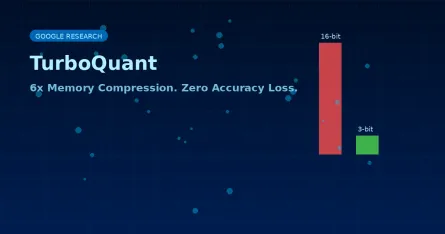
Google's TurboQuant Compresses AI Memory by 6x — With Zero Accuracy Loss
- Turker Senturk
- AI , Technology
- 6 min read
- 27 Mar, 2026
Every time you have a long conversation with an AI, your GPU is quietly sweating. It has to keep track of everything you've said — every token, every context — in something called the key-value (KV) c
read more
NVIDIA's 2026 State of AI Report: Adoption, ROI, and Challenges
- Türker Şentürk
- AI
- 11 min read
- 09 Mar, 2026
AI Is No Longer a Fancy Demo – It’s the Engine Driving Real‑World Business Growth When I first walked into a conference hall in 2015 and saw a robot arm “learn” to sort colored blocks, I felt the same
read more
The Age of the Personal Autonomous Agent: Is OpenClaw Your Next Teammate?
- Turker Senturk
- AI
- 8 min read
- 27 Feb, 2026
Beyond chatbots: How a "lobster-themed" open-source project turned local machines into 24/7 digital assistants. Picture this: It's 10:00 AM on a Tuesday, and you are acting as a human API. You have a
read more
The Hidden Engineering Behind Fast AI: How LLM Inference Actually Works
- Turker Senturk
- AI
- 12 min read
- 16 Feb, 2026
Here's something that used to keep me up at night: why does ChatGPT feel instant, while my own attempts at running a large language model on a cloud GPU felt like waiting for dial-up internet to load
read more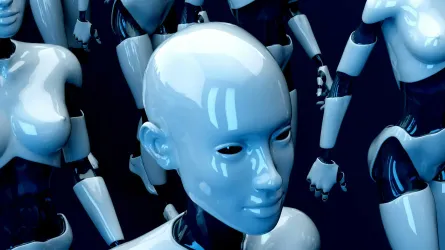
Robot Learns Realistic Lip Movements by Observation
- Türker Şentürk
- Technology
- 10 min read
- 17 Jan, 2026
The Robot That Learned to Talk Like a Human (and Finally Stopped Looking Creepy) When you watch a video of a humanoid robot trying to say “hello,” you’ve probably seen the same old nightmare: a stiff,
read more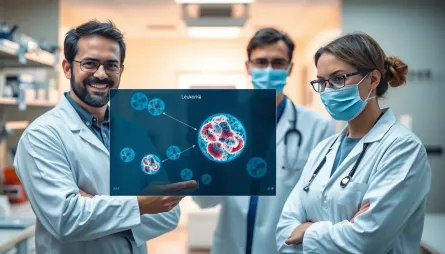
This AI Can Spot Dangerous Blood Cells That Doctors Often Miss
- Turker Senturk
- Technology
- 10 min read
- 13 Jan, 2026
Picture this: You're a doctor at the end of a grueling 12-hour shift. Your eyes are tired, your coffee has gone cold for the third time, and there's still a stack of blood smears waiting to be analyze
read more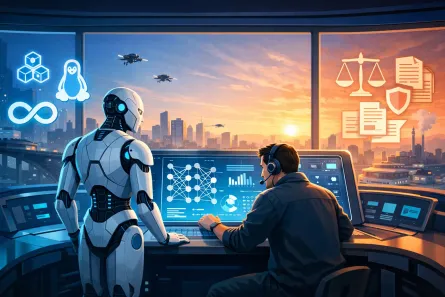
Weekly AI News Roundup: The 5 Biggest Stories (January 1-7, 2026)
- Turker Senturk
- AI
- 6 min read
- 07 Jan, 2026
Happy New Year, everyone! If you thought 2025 was wild for artificial intelligence, the first week of 2026 just looked at the calendar and said, "Hold my beer." We are only seven days into the year, a
read more
The High-Growth Hybrid: AI Product Manager
- Turker Senturk
- AI
- 4 min read
- 29 Dec, 2025
Ever feel like the tech world throws new job titles at us faster than we can update our LinkedIn? Data Whisperer. Prompt Engineer. Cloud Evangelist. It’s enough to make your head spin. But there’s one
read more
AI Training vs Inference: Why 2025 Changes Everything for Real-Time Applications
- Turker Senturk
- AI
- 9 min read
- 23 Dec, 2025
The AI landscape is experiencing a fundamental shift. After years of focusing on training massive models, the industry is pivoting toward inference — the phase where trained models actually do useful
read more
Duke AI Reveals Simple Rules Behind Chaotic Systems
- Turker Senturk
- AI
- 2 min read
- 22 Dec, 2025
Key HighlightsThe Big Picture: Duke researchers unveiled an AI that distills chaotic, high‑dimensional data into clear, low‑dimensional equations. Technical Edge: The framework blends deep learning
read more
Gemini 3 Flash: Next-Gen AI for Everyone
- Turker Senturk
- AI
- 3 min read
- 18 Dec, 2025
Key HighlightsBreakthrough AI Model: Gemini 3 Flash offers frontier intelligence built for speed at a fraction of the cost. Improved Performance: Outperforms previous models like Gemini 2.5 Pro, with
read more
Unlocking AI Potential: Fine-Tuning for Specialized Tasks
- Turker Senturk
- AI
- 4 min read
- 15 Dec, 2025
Key HighlightsEnhanced Accuracy: Fine-tuning allows AI models to achieve higher accuracy in specialized tasks. Unsloth Framework: An open-source framework optimized for efficient, low-memory training
read more
Introducing GPT-5.2: The Future of AI-Powered Productivity
- Turker Senturk
- AI
- 2 min read
- 12 Dec, 2025
Key HighlightsUnprecedented Capabilities: GPT-5.2 sets a new state of the art in professional knowledge work, outperforming industry professionals in various tasks. Enhanced Productivity: Average Chat
read more
Advancing Science and Math with GPT-5.2
- Turker Senturk
- AI
- 2 min read
- 12 Dec, 2025
Key HighlightsBreakthrough Model: GPT-5.2 is the strongest model yet for math and science work, accelerating scientific research. Improved Performance: GPT-5.2 Pro and GPT-5.2 Thinking achieve state-o
read more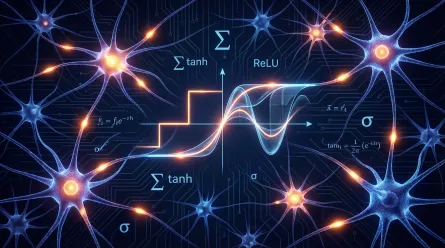
Activation Functions: The 'Secret Sauce' of Deep Learning
- Turker Senturk
- AI
- 8 min read
- 30 Nov, 2025
Have you ever wondered how a neural network learns to understand complex things like language or images? A big part of the answer lies in a component that acts like a tiny decision-maker inside the ne
read more
Quantitative Finance Faces AI Skills Gap
- Turker Senturk
- AI
- 3 min read
- 17 Nov, 2025
Key HighlightsOnly 9% of new graduates are considered "AI-ready" for quantitative finance roles 83% of respondents use or develop AI tools, despite limited understanding of AI and machine learning 44%
read more