Aiagents
Topics in Aiagents
Viewing all articles categorized under Aiagents.
Harvey Just Hit an $11 Billion Valuation — And It Only Does Legal Work
- Turker Senturk
- AI , Business
- 5 min read
- 27 Mar, 2026
There's a running anxiety in the venture capital world that OpenAI and Anthropic are going to eat everyone's lunch. As the two frontier labs expand into agents, applications, and enterprise deployment
read more
A Senior Engineer's Guide to Prompting AI for Real Code
- Turker Senturk
- Technology , Software
- 13 min read
- 07 Mar, 2026
If your idea of using AI for coding still involves tabbing twice to accept a generic boilerplate function, we need to talk. We're way past the era of mere code completion. As of early 2026, OpenAI Cod
read more
Anthropic and Infosys Partner to Develop AI Agents for Regulated Industries
- Türker Şentürk
- AI
- 11 min read
- 17 Feb, 2026
Anthropic × Infosys: Building AI Agents That Can Actually Pass the Regulatory Exam When a Silicon‑valley‑born AI lab teams up with an Indian‑grown consulting giant, the result isn’t just another “AI‑f
read more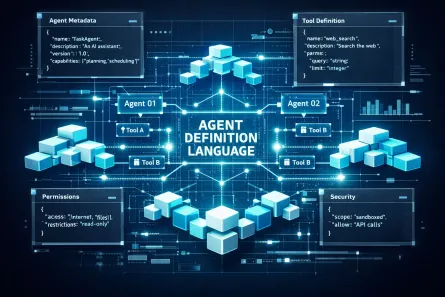
Agent Definition Language (ADL): The Missing Standard That Could Finally Tame the Wild West of AI Agents
- Turker Senturk
- AI
- 11 min read
- 09 Feb, 2026
Remember when every website had its own custom markup language before HTML became the standard? Or when APIs were a free-for-all before OpenAPI (Swagger) came along and said, "Hey, maybe we should all
read more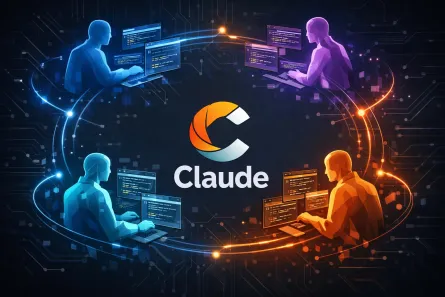
Building an AI Software Development Team with Claude Code Agents
- Turker Senturk
- AI
- 11 min read
- 17 Jan, 2026
Building an AI software development team with Claude Code agents Claude Code's multi-agent architecture represents a fundamental shift from AI-assisted coding to AI-driven development, where specializ
read more
Meta's $2 Billion Manus Bet: Why AI Agents Just Went from Experiment to Infrastructure
- Türker Şentürk
- AI
- 6 min read
- 04 Jan, 2026
147 trillion tokens. 80 million virtual computers. A few months of operation. Those numbers don't just describe a successful startup—they describe infrastructure that's already running at scale while
read more
Agent Compatibility in the MCP Era
- Turker Senturk
- AI
- 3 min read
- 20 Nov, 2025
Key HighlightsAgent compatibility is crucial for efficient tool-space interaction in the MCP era Designing for compatibility at scale is essential for avoiding interference and ensuring seamless inter
read more