Tiny Chip That Could Transform Quantum Computing
- Turker Senturk
- Technology
- 26 Dec, 2025
- 3 min read
Key Highlights
- The Big Picture: A chip thinner than a human hair can precisely steer laser light for future quantum computers.
- Technical Edge: Uses 80 × less microwave power than conventional modulators, dramatically reducing heat.
- The Bottom Line: Mass‑manufacturable photonics could finally let quantum machines scale beyond laboratory prototypes. 🚀
[Quantum computing promises unprecedented speed, but scaling up has been hampered by bulky, power‑hungry laser hardware. A new tiny chip—built with standard CMOS processes—offers a practical path forward, delivering ultra‑precise laser control while consuming a fraction of the power.]
Why Ultra‑Precise Lasers Are the Heartbeat of Quantum Machines
Trapped‑ion and neutral‑atom quantum computers store information in individual atoms. To make those atoms compute, we must shine laser beams with frequency shifts accurate to billionths of a percent. Any drift scrambles the qubits and ruins the calculation. Today’s tabletop electro‑optic modulators can achieve that precision, but they are large, expensive, and generate a lot of heat—making them unsuitable for the thousands‑plus optical channels a full‑scale quantum computer will need.
What the New Optical Phase Modulator Brings
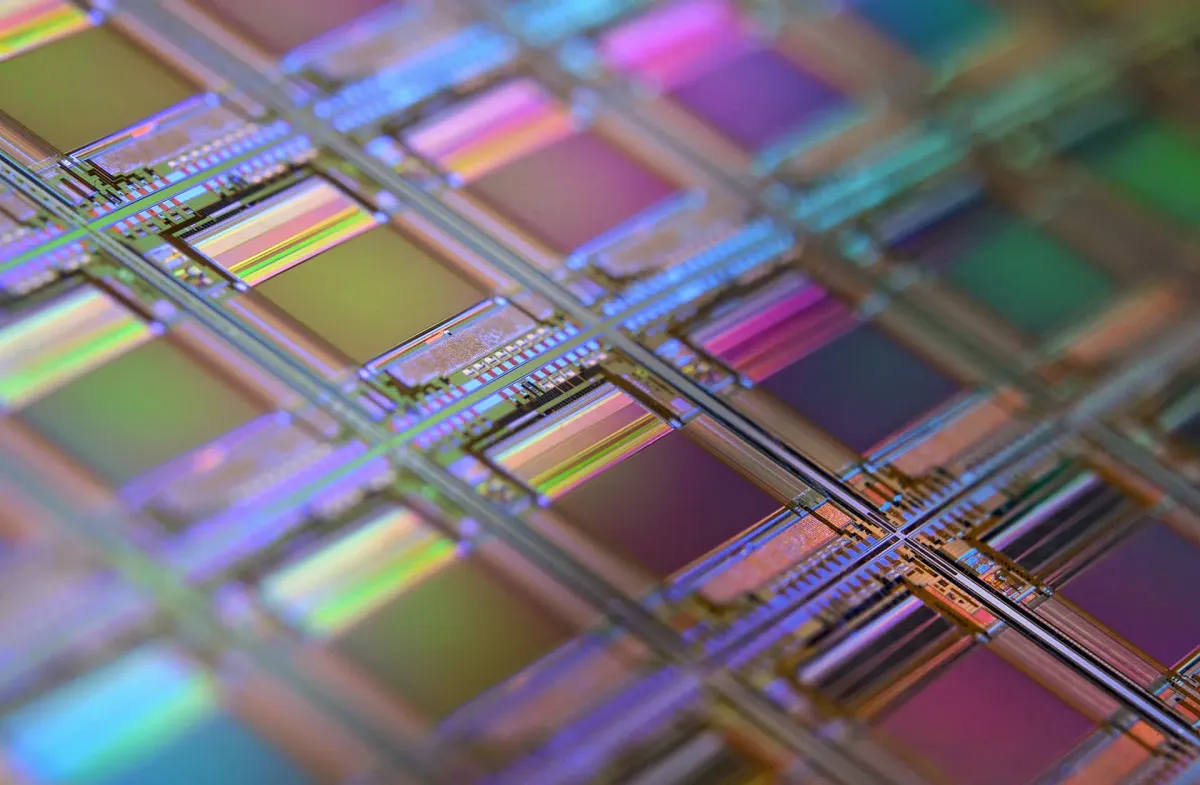
The University of Colorado team, led by Jake Freedman and Matt Eichenfield, engineered a gigahertz‑frequency acousto‑optic phase modulator that fits on a chip ~100 × thinner than a human hair. Its key innovations include:
- CMOS‑fabricated photonic circuit: Leveraging the same fab lines that produce smartphones, the chip can be mass‑produced with billions of identical units.
- Microwave‑frequency vibrations: Billions of oscillations per second let the device shift laser phase with extreme fidelity.
- Power efficiency: Consumes roughly 1/80th the microwave power of commercial modulators, cutting heat generation dramatically.
- Scalable architecture: The low‑heat footprint enables dozens—or even hundreds—of channels to be packed onto a single silicon die.
Technical Specs at a Glance
- Size: ~0.1 µm thick (≈100 × thinner than a hair)
- Operating frequency: Gigahertz acoustic waves (billions of cycles per second)
- Power reduction: ~80× less microwave power vs. existing modulators
- Fabrication: Standard CMOS fab (same process as modern CPUs and smartphones)
The TechLife Perspective: Why This Matters
We’ve long known that quantum computers need precision optics, but the lack of a scalable, low‑power solution kept them confined to research labs. This chip flips that narrative. By marrying photonic performance with CMOS scalability, it paves the way for quantum processors that can be built in volume—much like today’s consumer electronics. As the team moves toward fully integrated photonic circuits (frequency generation, filtering, pulse shaping on one die), we’re edging closer to a complete quantum photonic platform that could power the next generation of secure communications, ultra‑precise sensors, and computational breakthroughs.
The future of quantum computing may finally leave the tabletop and enter the fab.
Source: Official Link
Tags :
Share :
Stay Ahead in Tech
Join thousands of developers and tech enthusiasts. Get our top stories delivered safely to your inbox every week.
No spam. Unsubscribe at any time.