Samsung launches PlayGalaxy Cup: PUBG Mobile Global Open
- Türker Şentürk
- Gaming
- 06 Mar, 2026
- 10 min read
Samsung’s #PlayGalaxy Cup — How a Mobile‑First Esports League Is Trying to Rewrite the Playbook
“The Global Open marked a milestone with the launch of the inaugural 2026 #PlayGalaxy Cup league.” – David Moon, Samsung
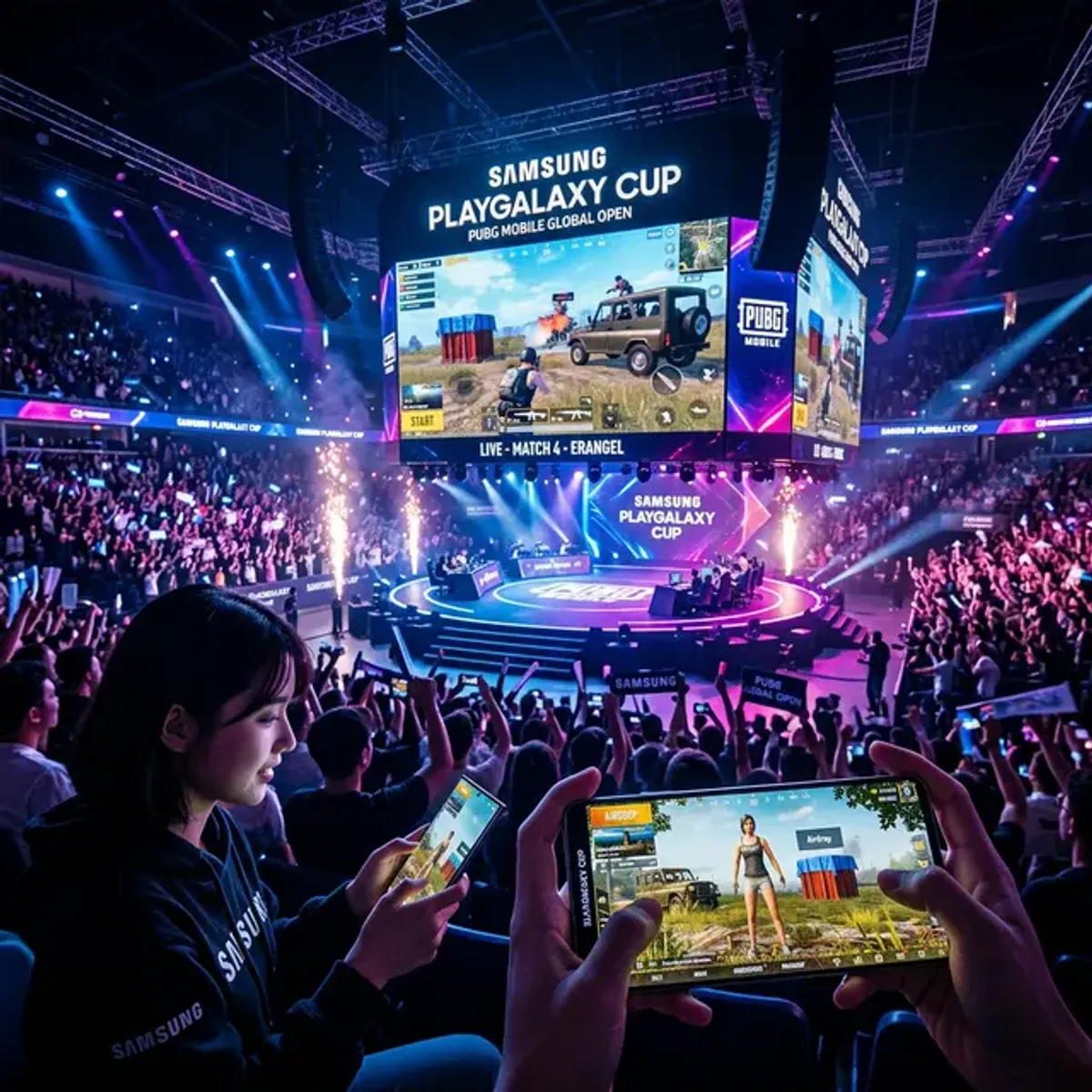
When I first saw the banner for Samsung’s #PlayGalaxy Cup: PUBG Mobile Global Open hanging over the Moscone Center in San Francisco, I expected another glossy product showcase—maybe a new foldable or a camera‑centric demo. Instead, I walked into a hybrid arena that felt part‑concert, part‑gaming lounge, and part‑tech expo. The smell of fresh popcorn mixed with the faint hum of a hundred Galaxy S26 Ultra phones charging on a wall of power strips. In the middle of it all, a stage lit like a mini‑Olympics ceremony, and a handful of creators—Sunny, CouRage, NiceWigg, Octane, and a rotating cast of OfflineTV personalities—ready to battle it out in PUBG Mobile.
If you’ve ever tried to explain mobile esports to a friend who still thinks “gaming” means a console in a dimly lit bedroom, you know the challenge. Mobile gaming has long been dismissed as “casual” or “for kids,” yet the numbers tell a different story: over 1 billion active mobile gamers worldwide, and a growing slice of them are serious competitors. Samsung’s newest venture is an attempt to prove, once and for all, that a phone can be a legitimate esports platform—if you give it the right hardware, the right ecosystem, and a little theatrical flair.
Below is my deep‑dive into what happened at the Global Open, why the Galaxy S26 Ultra matters beyond its specs sheet, and what this could mean for the future of mobile competitive gaming.
The Stage Was Set—Literally
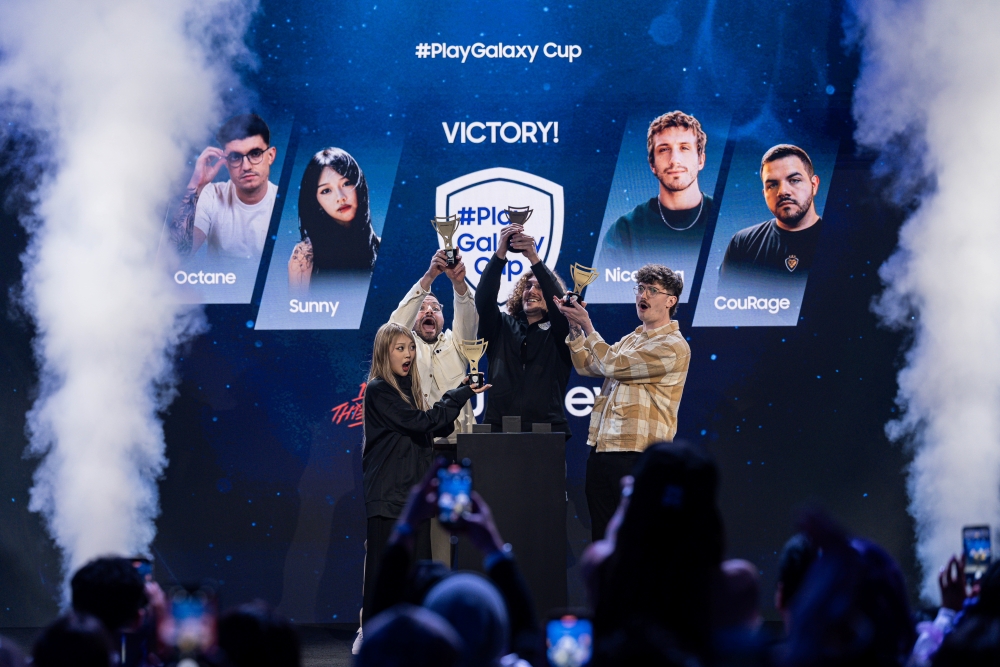
The event kicked off on February 26, 2026, with Samsung branding the night as the launch of the 2026 #PlayGalaxy Cup—a year‑long global league built around PUBG Mobile. The choice of San Francisco, a city that feels like the unofficial headquarters of tech culture, was intentional. Samsung wanted to attract not only hardcore PUBG fans but also the broader influencer community that lives and breathes streaming culture.
The opening ceremony featured a short, high‑octane video montage of previous mobile esports moments, set to a synth‑heavy track that could have been ripped from a 90s arcade game. It was a reminder that mobile gaming has been around longer than many realize, but the production values have finally caught up with the ambition.
A Roster That Reads Like a Who’s‑Who of Internet Gaming
The 16‑player lineup was a mix of professional esports talent and content creators:
| Team | Players | Affiliation |
|---|---|---|
| 100 Thieves (NA) | Sunny, CouRage, NiceWigg, Octane | North American esports org |
| OfflineTV | TinaKitten, Yvonnie, Foolish, Masayoshi | Creator house |
| TeamGalaxy (global influencers) | 8 rotating members | Samsung‑curated roster |
The blend felt purposeful. On one hand, you have Sunny and CouRage, veterans of the PUBG Mobile pro circuit who have been grinding qualifiers for years. On the other, you have TinaKitten and Yvonnie, whose follower counts rival many mid‑tier esports teams. This hybrid approach mirrors what the Overwatch League tried in its early days—mixing traditional athletes with entertainers to broaden appeal.
What struck me most was the chemistry. When Octane shouted “Let’s goooo!” after a clutch win, the crowd erupted in a way that felt more like a rock concert than a typical gaming tournament. The synergy between pro‑level tactics and influencer banter created a viewing experience that was simultaneously high‑skill and high‑energy.
The Galaxy S26 Ultra: Not Just a Phone, a Platform
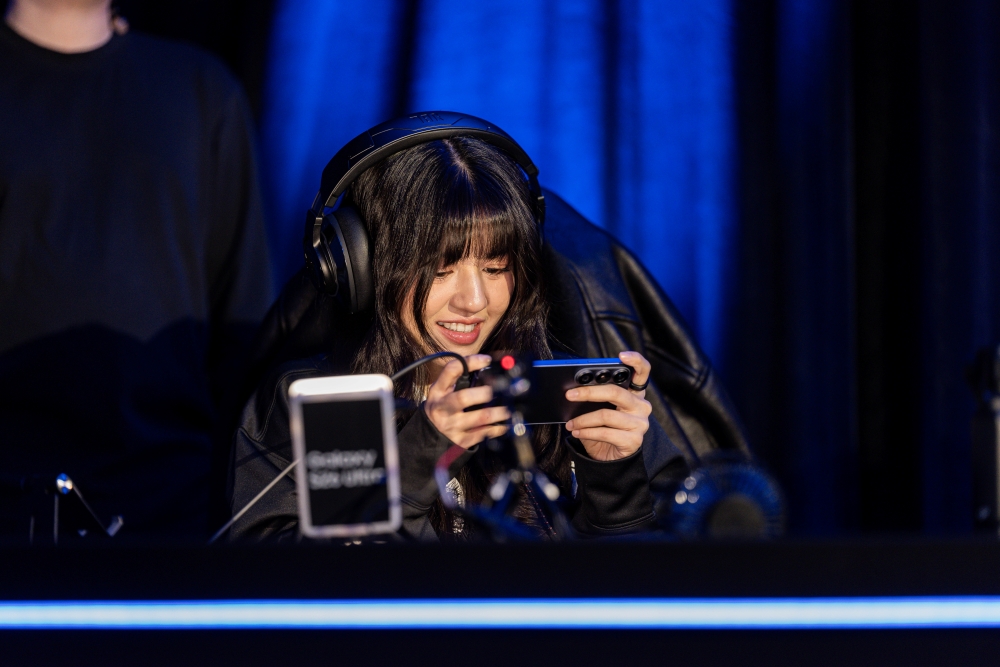
Samsung didn’t just hand the competitors any old device. Every player was equipped with the Galaxy S26 Ultra, a phone that, on paper, looks like an incremental upgrade over the S25 series. But a closer look reveals why it matters for mobile esports:
| Feature | Why It Helps in PUBG Mobile |
|---|---|
| 6.9‑inch QHD+ Dynamic AMOLED 2X, 120 Hz | Reduces motion blur, crucial for spotting enemies at a distance |
| Exynos 2400 (or Snapdragon 8 Gen 3 in US) | Higher single‑core performance improves frame rates in a CPU‑heavy game |
| 2 TB UFS 4.0 storage | Allows for quick loading of large maps and fast asset streaming |
| Game Booster + Adaptive Refresh | Dynamically allocates resources to the game, preventing throttling |
| Integrated 5G + Wi‑Fi 7 | Low latency connections for smoother online play |
In practice, the Game Booster mode—activated with a single swipe—locked the phone’s CPU and GPU to maximum performance while throttling background processes. I chatted with David Moon, Head of Influencer Marketing at Samsung, who explained that the feature was fine‑tuned with PUBG Mobile’s engine to keep the frame rate steady at 120 fps on the device’s display. That’s a noticeable difference when you’re trying to spot a sniper glint on the horizon.
During the matches, the large central screen displayed the gameplay in stunning clarity. The colors popped, the motion was buttery smooth, and the latency felt negligible. For anyone who’s tried to play a fast‑paced shooter on a mid‑range phone, the S26 Ultra’s performance was a reminder that mobile hardware has finally caught up to the demands of competitive play.
Ludwig’s Role: The Bridge Between Spectators and Players
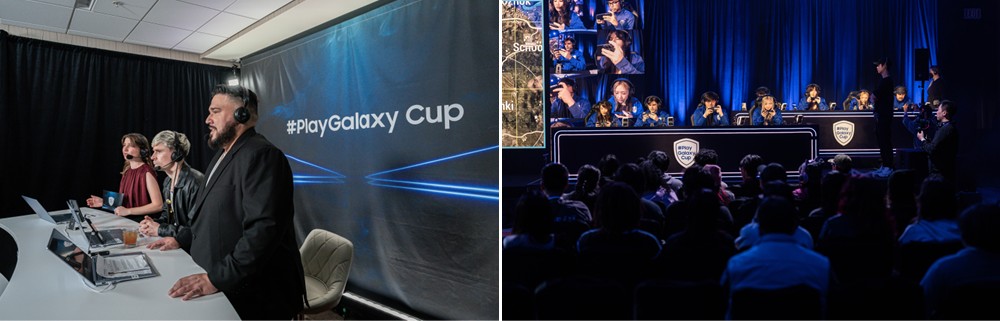
If the tournament’s gameplay was the meat, Ludwig Ahgren was the sauce. The former Twitch star turned YouTuber served as the event’s host, providing live commentary, backstage interviews, and impromptu jokes that kept the pacing lively.
Ludwig’s presence mattered for two reasons:
-
Accessibility: Not everyone in the audience is a PUBG veteran. Ludwig’s explanations of “zone shrink” mechanics and “drop strategies” made the action understandable for casual viewers. He often paused the live feed to break down a clutch moment, saying things like, “Look at that angle—if you’re playing on a 6.9‑inch screen, that’s a lot of visual real estate to work with.”
-
Community Integration: By inviting creators like Ashtax and Wynnsanity to co‑stream, the event tapped into multiple fanbases simultaneously. The result? Over 16.77 million total views across platforms—a number that dwarfs many traditional esports events that focus solely on a single league’s channel.
The Hybrid Format: A Blueprint for Future Mobile Leagues?
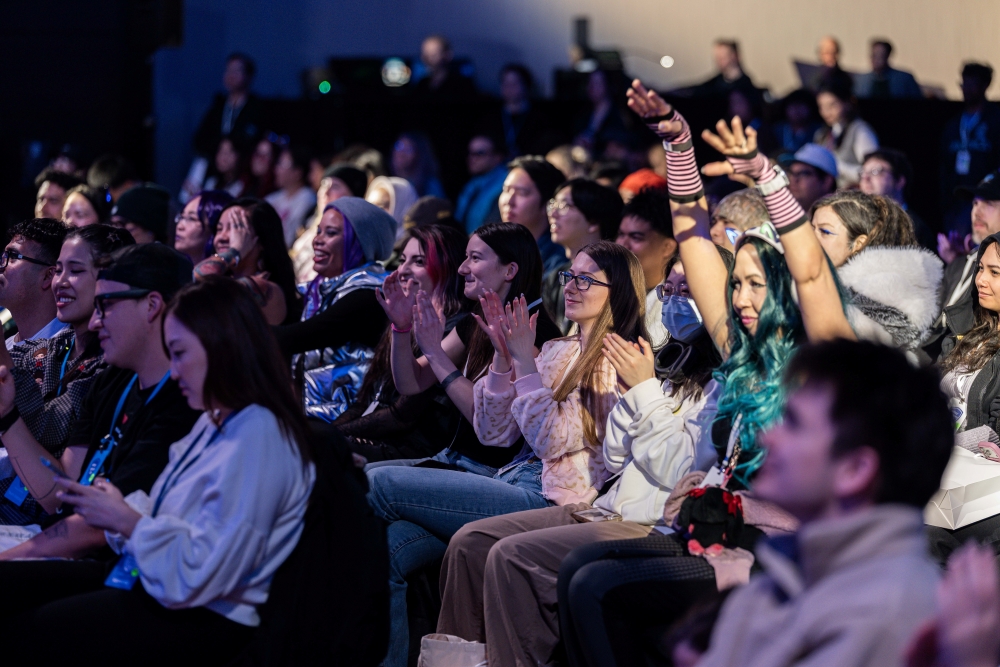
The #PlayGalaxy Cup was deliberately designed as a hybrid experience: a live audience in San Francisco plus a massive online viewership. Samsung set up a “experience zone” where fans could try the S26 Ultra themselves. The zone was more than a demo table; it was a mini‑arena with a custom‑tuned network, allowing attendees to jump into a practice match without the latency typically associated with public Wi‑Fi.
From a business perspective, this hybrid model solves two problems:
- Monetization: Physical tickets and on‑site sponsorships generate revenue that pure streaming can’t match.
- Scalability: Livestreaming to millions expands the brand’s reach far beyond the venue’s capacity, making the tournament attractive to advertisers looking for global exposure.
It also mirrors a broader trend in esports: regional qualifiers feeding into a global final. Samsung’s roadmap includes qualifiers in Europe, Southeast Asia, Oceania, North America, India, and South America beginning in May, culminating in a World Final at Gamescom 2026 in Cologne, Germany. This structure is reminiscent of the League of Legends World Championship, but with a mobile twist.
Why This Matters for Mobile Gaming (And Not Just Samsung)
1. Legitimizing Mobile as a Competitive Platform
For years, mobile esports have existed in a parallel universe—big in Asia, niche elsewhere. The #PlayGalaxy Cup is an explicit attempt to bring the format into the Western consciousness. By pairing a flagship device with a globally recognized title like PUBG Mobile, Samsung is saying: “We can produce a tournament that looks and feels as polished as any PC or console event.”
2. Hardware Arms Race
If you’re a mobile gamer, you’ve probably felt the frustration of thermal throttling—the moment your phone heats up, the frame rate drops, and your reflexes suffer. Samsung’s emphasis on UFS 4.0 storage and a custom cooling solution (the S26 Ultra’s vapor‑chamber design) sets a new benchmark. Competitors will need to match or exceed these specs to stay relevant, potentially accelerating the rollout of 5G‑optimized and high‑refresh‑rate displays across the industry.
3. Creator‑Centric Ecosystem
The involvement of creators—both as players and co‑streamers—highlights a shift from “team‑centric” esports to influencer‑centric experiences. This model reduces the barrier to entry for new teams; you don’t need a full‑time org, just a solid following and a good device. It also creates a feedback loop where manufacturers can directly gather data on how real‑world users interact with their hardware under competitive stress.
4. Potential Risks
No venture is without pitfalls. The biggest concern is fragmentation: if Samsung’s league dominates, other Android manufacturers may feel left out, leading to a splintered ecosystem where only a handful of devices are considered “esports‑ready.” Moreover, the reliance on a single title—PUBG Mobile—means the league’s health is tied to the game’s longevity and regional popularity.
My Takeaway: A Promising First Chapter
Walking out of the Moscone Center, I still had the faint smell of popcorn and the echo of “One more round!” in my ears. The event felt less like a product launch and more like a cultural moment—a point where the lines between tech, entertainment, and sport blur.
If you ask me whether the Galaxy S26 Ultra is the best phone for PUBG Mobile, I’d say it’s the best phone we’ve seen for that specific use case. That’s not to say it’s the best phone for everyone; its price tag (roughly $1,399 for the 2 TB model) keeps it out of reach for the average gamer. But as a reference platform for what mobile esports can look like, it sets a high bar.
Samsung’s gamble on a year‑long league could pay off handsomely if they keep the momentum. The real test will be the regional qualifiers later this year—will they attract the same level of excitement? Will the World Final at Gamescom feel like a culmination or a footnote?
For now, I’m cautiously optimistic. The #PlayGalaxy Cup shows that with the right hardware, the right talent, and a dash of showmanship, mobile esports can be more than a niche hobby. It can be a spectacle that draws millions, sells devices, and maybe—just maybe—rewrites the rulebook on what a “gaming platform” looks like.
Sources
- Samsung Newsroom – Samsung Mobile Galaxy S26 Ultra & PlayGalaxy Cup Launch (Feb 26 2026).
https://img.global.news.samsung.com/global/wp-content/uploads/2026/03/06093803/Samsung-Mobile-Galaxy-S26-Ultra-PlayGalaxy-Cup-PUBG-Mobile-Global-Open_main1.jpg - Samsung Newsroom – Player vonnyfelicia focuses on her gameplay (Feb 26 2026).
https://img.global.news.samsung.com/global/wp-content/uploads/2026/03/06093829/Samsung-Mobile-Galaxy-S26-Ultra-PlayGalaxy-Cup-PUBG-Mobile-Global-Open_main2.jpg - Samsung Newsroom – Ludwig hosts the event (Feb 26 2026).
https://img.global.news.samsung.com/global/wp-content/uploads/2026/03/06094339/Samsung-Mobile-Galaxy-S26-Ultra-PlayGalaxy-Cup-PUBG-Mobile-Global-Open_main3.jpg - Samsung Newsroom – Fans at the event (Feb 26 2026).
https://img.global.news.samsung.com/global/wp-content/uploads/2026/03/06094052/Samsung-Mobile-Galaxy-S26-Ultra-PlayGalaxy-Cup-PUBG-Mobile-Global-Open_main4.jpg - Interview with David Moon, Head of Influencer Marketing, Mobile eXperience Business, Samsung Electronics (press release).
- PUBG Mobile – Official tournament rules and season schedule (2026).
- Ludwig Ahgren – Live stream archive (YouTube, March 2026).
Share :
Stay Ahead in Tech
Join thousands of developers and tech enthusiasts. Get our top stories delivered safely to your inbox every week.
No spam. Unsubscribe at any time.