Phantom Blade Zero's Kung Fu Combat Balances Approachability with Authentic Wuxia Homage
- Turker Senturk
- Gaming
- 13 Dec, 2025
- 16 min read
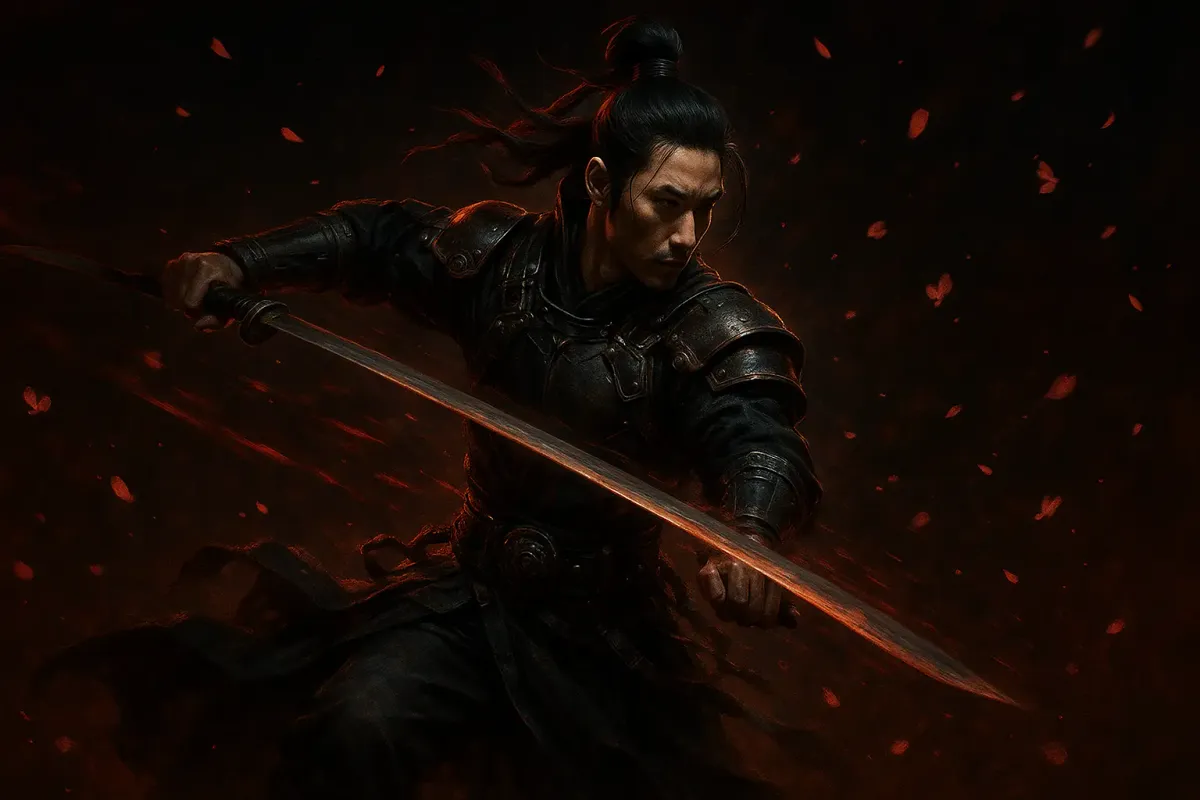
Phantom Blade Zero’s dynamic fights are fast, fluid, and unabashedly violent. Playing as Soul, a Phantom World assassin, the player swings a heavy sword as if it were a kitchen knife. It floats, slashing in a manner both wild and precise. He spins, sword following behind to land the crushing blow. Enemy kicked to the ground, Soul raises his sword to the sky before effortlessly cutting his foe off at the neck.
Phantom Blade Zero is a big-budget reimagining and the “spiritual rebirth” of Game Director Soulframe Liang’s 2010 indie RPG Rainblood: Town of Death. It’s also a game that is distinctly kung fu, specifically inspired by Chinese wuxia films like The Valiant Ones, The One-Armed Swordsman, and Once Upon A Time in China.
Tapping into the spirit of those and many other wuxia classics, S-GAME brought some of the world’s best martial artists into their capture and development studios to create a game that’s unique in a sea of Soulslikes. Speaking to Epic Games Store News, S-GAME developers discussed at length the way motion capture helped shape Phantom Blade Zero’s dynamic fights, and how kung fu acts as a vehicle to share its storytelling and gameplay with the world.
A Journey Against Time
When the action role-playing game begins, Soul has just months to live. With so little time remaining, he sets off into the Chinese-inspired Phantom World to clear his name, following allegations that he murdered the leader of his clan. His journey is a means of saving himself—but he uncovers a larger and more dangerous conspiracy in the shadows.
“I would describe Phantom Blade Zero from two aspects,” said S-GAME Founder and CEO Liang. “One is style. Phantom Blade Zero is an action-RPG that combines the Chinese kung fu culture with some modern pop culture elements, such as steampunk, cyberpunk, and anime and manga cultures. We created a new identity, as kungfupunk.”
The other aspect is Phantom Blade Zero’s gameplay. Some people will describe the game as a Soulslike a la Elden Ring, while others will call it a hack-and-slash like Ninja Gaiden. They’re both right and wrong.
Introducing Kungfupunk
“Phantom Blade Zero, for sure, incorporates some essence of both, but it’s neither of them,” Liang said. “We wanted to create new gameplay that’s accessible to the majority of players. It does have some features learning from Souls games, learning from hack-and-slash games, but we put everything together to make a new genre.”
Wuxia is a genre of Chinese fantasy that centers on martial arts fighting. While it often features a historic setting grounded in reality, the fights are exaggerated. Characters move in ways that people cannot normally move—it’s why wires are often used in filming these sorts of movies, like Crouching Tiger, Hidden Dragon or House of Flying Daggers.
“We’re creating our own understanding of wuxia and our own understanding of how people can fight and do action in games,” Liang said.
A team of more than 150 people (including the publishing department) has been working on the game across three different cities in China and one in the United States—the headquarters in Beijing, motion capture and animators in Shanghai, concept art and design in Hong Kong, and a global publishing team in Los Angeles. “We’re a small team, but we’re doing something big,” said Liang. Beyond that team of 150 people in-house, Liang said that contractors and outsourced workers include “10 times that number.”
Liang said that a “short-chain of decision making” and full use of Unreal Engine 5’s capabilities for game-making and motion capture are a big part of the studio’s ability to do a lot with a relatively small in-house team.
“Without Unreal Engine 5, it wouldn’t be possible for 150 people to do a game as big as ours,” said Liang. “We move fast, test everything fast, and iterate. There’s no secret. We make full use of the production power in China, like 3D modeling and 3D scan and motion capture. We have some of the best resources here in China, which is valuable in making such a big game.”
Fighting in a New Genre
Though Phantom Blade Zero uses the wuxia genre as a way to tell a universal story of “revenge, loyalty, love, and friendship,” as Liang described it, the fighting is a major draw for players. It certainly looks like a Soulslike in some respects, with its moody color scheme and acrobatic fights. And then there’s the clear inspiration from the likes of Ninja Gaiden or Devil May Cry, with their flashy and satisfying combo systems.
But both genres have their issues, at least to Liang. Hack-and-slash games feel better to watch than play, according to Liang, and Soulslikes start with a character that’s too weak. Phantom Blade Zero, from the start, was intended to make the player feel strong and powerful—even if they don’t have the reaction timing to pull off fancy combinations.
“It’s about fast and smooth flow of combat rather than emphasizing the moves,” said Phantom Blade Zero Combat Designer Bob Wu. “What makes players feel this power fantasy is the seamless switch between offense and defense, as well as the cool finishers.”
The Motion Capture Studio
To capture this fighting style, S-GAME turned to martial art experts and a top-notch choreography team at its in-house motion capture studio. It’s a symbiotic relationship between the game designers and the motion capture team, Wu said.
The kung fu experts doing the motion-capture choreography are masters of their craft. They’re able to provide a huge amount of authenticity to both the weapons and fighting in the game. But the motion capture artists rely on the game developers to set a framework—what sort of abilities and other movements need to be captured. “We have a very close collaboration between designers and motion capture artists,” he said.
S-GAME’s enormous and open motion capture studio is located in Shanghai, China. The ceilings are very high so that motion capture artists can jump, flip, and kick while dangling from wires. As is customary in a motion capture studio, everything is shades of gray and white to better track the capture points on the infamous black mocap suits, studded with white balls. On screens, the actors’ body structures are rendered in real-time as faceless, all-white bodies, showing the movement captured by the range of cameras.
People on the sidelines pull wires to help the actors soar, as they jump off boxes and swing special swords rigged for capture. There are all sorts of props actually, including an arsenal of weapons. That variety is especially important in a game like Phantom Blade Zero, where the player has a big selection of weapons to choose from. Blades are both short and long, light and heavy. For instance, there’s a wavy sword that emulates a snake’s body and a flexible sword that’s good for deflecting enemy strikes.
Epic Setpiece Battles
Enemies vary greatly, too. There’s one scene in Phantom Blade Zero where Soul fights an armored Chinese lion. In footage from the motion capture process for that encounter, actors wear their black body suits with a wireframe lion dance head rigged for capture.
Another big setpiece fight shown in earlier trailers makes it evident why Phantom Blade Zero’s motion capture studio needs wires. The second phase of the Seven Swordsmen fight is the Hanged Swordsman, where the enemy fights while dangling from red threads tied to his two legs and one arm. He fights with the one free arm, flying wildly through the air. It’s inhuman, dynamic, and makes for an electric fight.
“We used three wires to hang our kung fu master, and he can do whatever he wants,” Liang said. “It’s all done by a real person.”
Above the motion capture studio, animators work to bring the captured motion into Phantom Blade Zero. “We have a very rapid dev cycle that’s happening between the mocap studio and designers,” Wu said. “Our first floor is the motion capture guys. We have a second floor full of animators ready to clean up the data and send it back to headquarters. Everything happens super quick.”
It’s not rare to find designers down in the motion capture studio so they can communicate the team’s needs even more quickly. “The key is to make sure that the martial arts carries the authenticity of the move, while at the same time have it gamified so that players can feel the authenticity,” said Wu. “That’s been helped by the close collaboration between the designers and mocap artists.”
Phantom Blade Zero marketing director Julius Li said that it takes roughly one week to design a boss fight “from scratch” to its implementation in the game. “We are very confident about the efficiency right now in the workflow we created by collaborating with authentic martial artists who’ve been practicing martial arts for more than several decades.”
Making a Kung Fu Fight
The Phantom Blade Zero team begins with the “big picture backstory” of the characters that take part in its big fights, or as Wu said, “what their goal is, what their purpose is.” They build out from there, putting the characters’ backstory into the context of Phantom Blade Zero’s dark wuxia world. What mechanics should this character work with to communicate the story S-GAME is trying to tell? It’s a collaboration between the game designers and the martial arts choreographers who provide insight into historical Chinese weapons and fighting styles.
“Our choreography director has a lot of knowledge and wisdom on how weapons should actually be used in real fights,” Wu said. “We utilize all this information—the backstory, actual [historical] info—then design mechanics and fights so players feel a very holistic experience.”
Liang gave an example of how this might work. Say he’s got a rough idea of a character’s backstory—like, he just knows that he wants the character to wield a massive blade. The character has to be very strong to actually hold that sword. The kung fu masters that the Phantom Blade Zero team work with can then run with that idea.
“The kung fu master choreographer will have tons of ideas about the use of this blade,” Liang said. “He’ll give us 20 different fractions of blade art. He’ll give us some crazy samples without motion capture, filming some previews for us. They basically give the image to our very vague idea in the second phase. When we have enough of this, all those action and kung fu elements will go to the motion capture, and all the motion capture assets will come back to our designers.”
Then it’s back to the S-GAME designers, who incorporate all the motion capture data into Phantom Blade Zero with the help of the reference material. The little balls attached to the suits are meant to help capture movement, but sometimes they move around. It means that not everything is captured correctly, so it’s the animators’ job to make sure the moves are translated faithfully—or potentially enhance the movement and make it more exciting, if necessary.
Even Opening a Door Requires 15 Animations
Everything in Phantom Blade Zero is motion-captured, according to the designers—even some monsters. “As long as it has arms and legs, we still use motion capture in the first round,” said Liang. Opening a door seems simple enough, but it might require 15 animations for opening from different sides, angles, and locations. If you want to push it open instead of grabbing the knob, that’s more animations. It gets broken down into very small pieces across different scenarios, which are then implemented throughout Phantom Blade Zero.
Walking and running might be even harder than animating fighting, Liang said. Fighting movements and finishers are often very exciting to see, but they’re singular set animations. Running involves working with more than 100 animations. Emotion and body language need to match up with a walk or run, as does opening a door.
“Walking, running, and opening a door seem very simple,” said Li, “but when you fit into the framework of different emotions and delivering an ambiance—the emotion and tension within it—you have to be different. That makes it very difficult.”
And the presence of the kung fu masters is important, even down to these little details. The way a kung fu master runs is different from an everyday person—or even the hero of a Western game like Red Dead Redemption 2. A big, muscular man is strong, but runs a little heavy. In kung fu, there’s an antigravity feeling that’s hard to master, according to Liang. If it looks wrong, it’ll be very obvious, because there’s so much of it in the game. It’s literally the transition from one bit to the next.
Li added that the experienced choreographers and martial artists working on Phantom Blade Zero have an instinctive understanding of their bodies and the weapons they use. It means that the experts can create stories in movements both big and small. He pointed to a moment on set with a mocap artist filming a finishing move using a steel blade—the enemy gets kicked to the ground before their head gets chopped off.
“I asked the martial artist and choreographer, ‘What’s the key point or most important thing to make this combo feel powerful, especially when kicking the minions to prepare them to be executed?’” said Li. “Their answer to me was, ‘Always remember to twist your hip before you kick.’ They demonstrated that, and it was stunningly powerful to see them on site doing that. This is just one fraction of the examples we encounter every day that are so ingrained in the culture and instinctive understanding of the martial arts practitioner.”
That expertise is how S-GAME expects to create movements and fights that haven’t been seen in a video game before.
“If we follow the old way,” Liang said, “we will do nothing exceeding Ninja Gaiden or Devil May Cry, because those are existing experiences. If you limit yourself to the game experience, we will never do something people haven’t experienced before. But fortunately, there are tons hidden in the iceberg of Chinese kung fu and sword arts that haven’t been expressed before [in games]. It’s good for us to dig those treasures and polish them and present them.”
Balancing Authenticity with Kick-Ass Combat
S-GAME wants to be authentic to its inspiration in wuxia fighting movies—but games aren’t movies, and they work in different ways. Wu said the biggest challenge in translating the motion captured footage to dynamic and engaging in-game combat is ensuring the correct visual cues are presented to the player.
“When we’re talking to the mocap artists, we want each move to be very authentic,” he said. “But the thing is, in authentic Chinese kung fu, their most powerful move they usually hide. It’s similar in MMA, where when you’re ready to throw a powerful punch, you try to hide your fist. It’s the same thing we faced in our game—where if we want to present something realistic in fights, then oftentimes, enemies hide their intentions. But because it’s a game, it wouldn’t be fair to the players who don’t see the attack coming.”
A successful player in any game with fighting isn’t just button-mashing. They’re watching the enemy and understanding the patterns so that they know when to block, parry, or strike. If an enemy is hiding their intention, that pattern-matching becomes difficult. Too difficult. A game like Phantom Blade Zero can present players with a challenge. That’s not a problem. It’s only when it feels “unfair” that players may get frustrated and step away.
Wu said a core part of the job in translating motion capture data to fun gameplay is making sure there’s a strong visual cue for players, while keeping the authenticity of the movement.
“For example, in the demo that we presented at the end of July, there was a spear soldier,” Wu said. “One of his most famous moves in Chinese martial arts is a move where you turn your back and you stab the spear out when you’re turning your back. The intention is to hide your spear when you’re attacking, but when we put it into the game, we want the players to be able to react to it. We connected that move with a special dodge that dodges back and then does the special attack.”
“The indicator becomes the special attack,” Liang added.
The other problem with entirely authentic Chinese kung fu, according to Liang, is that it’s very fluid. “There’s no very clear indicator of when it’s attacking and when it’s defending. That’s the essence of Chinese kung fu. It’s not like modern fighting. You’re basically attacking and defending in the same movement. When you fight with a sword, you can’t tell if it’s a stab, parry, or defense. It’s very fast movement.”
When you watch footage from Phantom Blade Zero, the fighting still looks very fluid and fast-paced. The movements blend together in a way that almost looks like a dance. But S-GAME said it took steps to keep it from being “pure performance” by including some of these key indicators to signal something to the player. “That’s something we have to balance,” Liang said.
Using Kung Fu to Tell a Bigger Story
Phantom Blade Zero’s kung fu is a “package” that tells a universal story, per Liang. S-GAME is taking a similar approach to martial arts as Bruce Lee, who helped bring the Chinese genre to a global audience decades ago.
“He used kung fu as a channel to deliver his philosophical ideas, craft his characters, and tell a story,” Liang said. “Kung fu is merely media working to express something universal. What we’re doing now, after half a century, is more or less the same thing. We use kung fu and video games as media, as a channel, but what we deliver is gameplay, story, image, and technology, and the excitement for many things, like style, characters, writing. All those can be understood by anyone, even without any background or knowledge of the culture and kung fu.”
Kung fu, through Lee and others, has “been a symbolic meaning of how the western world understands modern China,” Li said.
The team at S-GAME is ready to share more about the world of Phantom Blade Zero—a culmination of more than a decade’s worth of work, going back to Rainblood—with players, so stay tuned for more details.
Phantom Blade Zero will release on the Epic Games Store in the fall of 2026.
Source: Epic Games Store News
Share :
Stay Ahead in Tech
Join thousands of developers and tech enthusiasts. Get our top stories delivered safely to your inbox every week.
No spam. Unsubscribe at any time.