The Age of the Personal Autonomous Agent: Is OpenClaw Your Next Teammate?
- Turker Senturk
- AI
- 27 Feb, 2026
- 8 min read
Beyond chatbots: How a “lobster-themed” open-source project turned local machines into 24/7 digital assistants.
Picture this: It’s 10:00 AM on a Tuesday, and you are acting as a human API. You have a browser window open to your email, another hooked to a client CRM, and a third frantically trying to distill a forty-page PDF into a briefing document. Your hands are flying across the keyboard, transferring data from one silo to another, formatting text, and scheduling updates. You are a highly skilled professional, yet you are spending a significant portion of your day doing exactly the kind of repetitive, predictable digital labor that computers were supposedly invented to eliminate.
We have been promised that artificial intelligence would be the ultimate cure for this drudgery. But when you look at how most of us interact with AI today, the reality does not quite match the glossy marketing. We type a prompt, wait for a response, copy the output, and then manually wire it into whatever workflow we are actually trying to complete.
The Chatbot Ceiling
This is the fundamental limitation of the current AI paradigm. Large language models like standard ChatGPT, Claude, and Gemini are undeniably brilliant, but in their basic forms, they are essentially stateless oracles. They sit inside a chat window, waiting for you to tell them exactly what to do next. They hit a ceiling because they do not act. They don’t have hands on the keyboard, they lack persistent memory of your system’s idiosyncratic file structures, and they certainly don’t have the agency to click “send” or “deploy” without your explicit permission and constant supervision.
You have to feed them context every single time. If you want a chatbot to analyze a new dataset, you upload it. If you want it to draft an email based on that analysis, you ask it. The human remains the bottleneck, the orchestrator, and the primary mechanism for moving information from point A to point B. It isn’t a teammate; it’s a very sophisticated typist.
Enter the Autonomous Agent Era
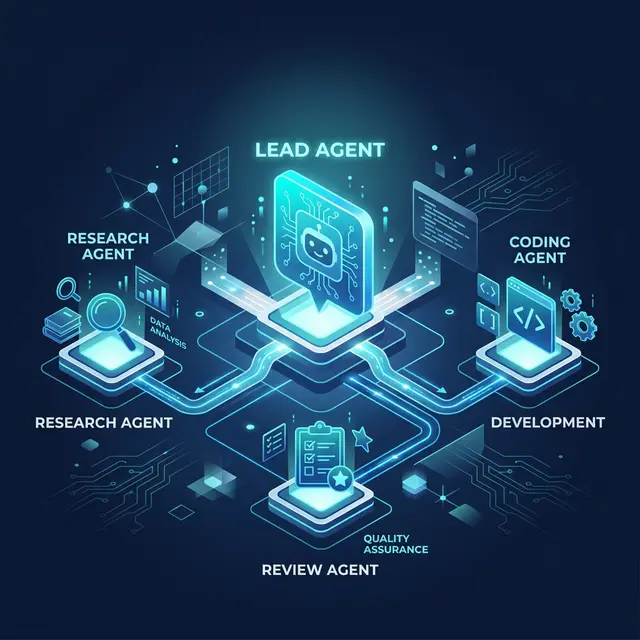
This is where the conversation shifts from chatbots to the autonomous AI agent. We are entering an era where AI systems are not just designed to generate text or code in a vacuum, but to plan, use tools, execute multi-step tasks, and navigate digital environments without constant hand-holding. An agent is not just a brain; it is a brain connected to a pair of hands.
The underlying architecture making this possible has evolved rapidly. We saw the early, somewhat chaotic sparks with projects like AutoGPT, which attempted to give language models open-ended goals with mixed results. More recently, frameworks like LangGraph and the broad adoption of the MCP protocol (Model Context Protocol) have provided the structured scaffolding needed for AI to interact with external tools and APIs reliably.
An agent can look at a high-level goal—“research the latest competitors in the CRM space and update our internal database”—break it down into logical steps, open a browser, read the documentation, synthesize the findings, and write the SQL queries to insert the data. It shifts the human role from micromanaging every tiny interaction to setting the overarching direction and reviewing the final output.
Anatomy of a Lobster: Inside OpenClaw
This brings us to one of the most intriguing developments in this space: OpenClaw. Standing out in a sea of corporate cloud announcements, OpenClaw is an open-source, local-first framework designed to turn your own machine into a dedicated execution environment for a personal AI assistant. What struck me most about this project is not just its technical ambition, but its fierce commitment to keeping the processing and the power close to the user rather than locked behind an enterprise API subscription.
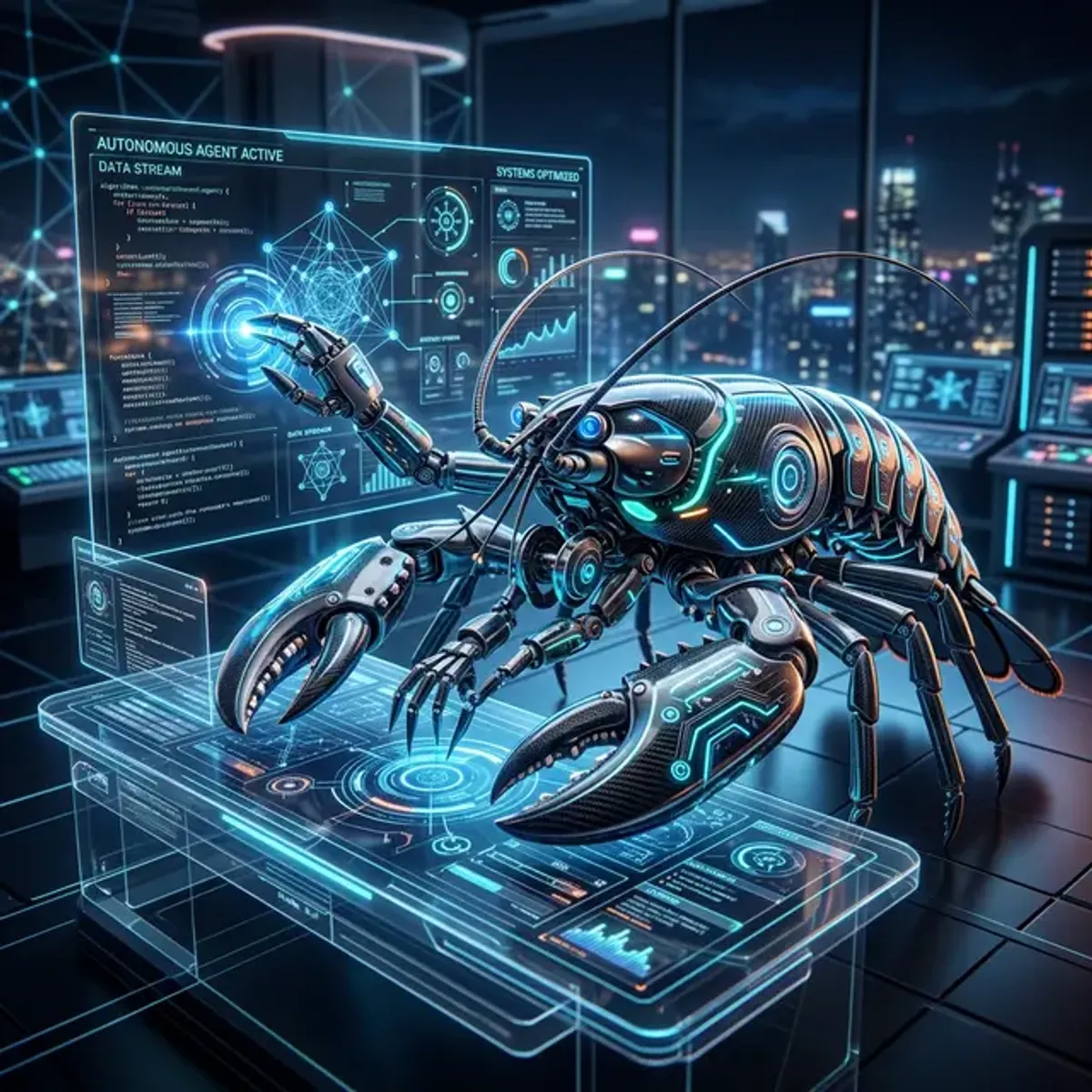
The project leans heavily into a distinctive “lobster” metaphor, which turns out to be surprisingly apt. Current chat sessions are often fleeting—they answer a prompt and vanish from your active context. OpenClaw is designed to be gripping, persistent, and multi-limbed. Much like a lobster grabbing onto something, once you hand a task to this framework, it doesn’t let go until the work is complete. It utilizes multiple “claws” or specialized tools simultaneously, fetching data with one background process while drafting a response with another.
Technically, OpenClaw operates as a local orchestrator. It deeply integrates with the aforementioned MCP protocol, allowing it to standardize how it connects to your local file system, your databases, and your external services. Because it is framework-agnostic regarding the underlying intelligence, you can plug in a cutting-edge cloud model if you need maximum reasoning capabilities, or you can route it through a local LLM running on your own GPU for completely private, offline execution.
This local-first architecture is a massive differentiator. When you are dealing with an open-source AI agent, especially one that has access to your raw personal files or unreleased company source code, the idea of streaming every keystroke to a remote server is often a non-starter for privacy-conscious developers or small businesses. OpenClaw gives you the autonomy of an agent with the security of a local command-line script. You control the costs, you dictate the data privacy, and you control exactly which tools the lobster is allowed to pinch.
Real-World Autonomy
To understand why this matters, you have to look past the abstract technology and imagine the daily friction points it removes. Think about a content creator or small business owner who needs to keep an eye on industry trends. Instead of spending an hour every morning scanning newsletters, they can deploy a local AI agent overnight. The agent wakes up at 4:00 AM, monitors twelve different RSS feeds, curates the most relevant developments based on past editorial preferences, drafts a concise morning briefing, and posts it silently into a private Slack channel—all before the owner has even started the coffee maker.
For a software developer, the use case is even more potent. Imagine setting an agent to monitor a specific GitHub repository for new issues. When a bug report comes in, the agent automatically clones the repository, attempts to reproduce the bug based on the issue description, searches the codebase for the fault, drafts a preliminary pull request with a fix, and kicks off the local test suite. By the time the developer logs in, they aren’t starting from scratch; they are reviewing and merging a proposed solution.
These are not hypothetical science fiction scenarios; they are exact workflows that persistent, tool-enabled agents are executing today. It elevates the machine from an answering engine to a proactive staff member operating silently in the background.
The Friction Points
But let’s be honest and ground this in reality. Building and managing this kind of autonomy is still genuinely hard. If you are going the completely local route, you are immediately slamming into hardware dependencies. Running a model smart enough to reliably plan multi-step tasks without hallucinating requires serious RAM and GPU horsepower that most thin-and-light laptops simply do not possess.
Furthermore, the setup complexity is not for the faint of heart. Connecting an agent to your email, your calendar, and your codebase requires wrangling API keys, configuring tool permissions, and sometimes dealing with frustrating logic loops when the system gets confused. Model quality constraints mean that a framework might flawlessly execute a task nine times, and on the tenth, wildly misinterpret a standard error message and spend thirty minutes trying to debug an entirely unrelated script. Hand-holding hasn’t been completely eliminated; it has just moved from granular prompt engineering to higher-level system debugging.
The Bigger Picture
Zooming out, the implications of accessible, personal autonomy are profound. For the last decade, high-level automation has been the exclusive domain of large enterprises with dedicated engineering teams building complex data pipelines. Projects like OpenClaw are actively democratizing that capability. When individuals—not just corporations—can deploy their own autonomous systems, the basic definition of productivity fundamentally shifts. We will eventually stop measuring output by how fast someone can type or how many applications they can juggle simultaneously, and start measuring it by how effectively they can direct and manage their digital workforce.
We are witnessing the early stages of a new human-agent collaboration model. The ultimate goal isn’t necessarily to replace the human in the loop, but to elevate them. You become the manager of a highly capable, albeit occasionally literal-minded, digital organism that lives on your hard drive and works while you sleep.
The transition from chatbots to active agents feels akin to the moment we went from looking up information in an encyclopedia to having a personal librarian who also runs your errands. The technology is still somewhat raw, occasionally unpredictable, and requires real patience to configure. But the core promise—a machine that actually does the work instead of just talking about it—is finally within our reach.
The lobster has its claws on the future of personal computing, and it doesn’t look like it’s going to let go.
OpenClaw is available on GitHub. If you experiment with it, we’d love to hear what you build.
Share :
Stay Ahead in Tech
Join thousands of developers and tech enthusiasts. Get our top stories delivered safely to your inbox every week.
No spam. Unsubscribe at any time.