NVIDIA RTX GPUs Power VR Memory Research at MBL
- Turker Senturk
- Technology
- 23 Dec, 2025
- 3 min read
Key Highlights
- The Big Picture: Researchers blend AI, VR, and high‑performance hardware to map memory proteins in the hippocampus.
- Technical Edge: NVIDIA RTX GPUs and HP Z Workstations enable 10 TB of 3D volumetric data to be inspected in real time.
- The Bottom Line: The workflow turns a months‑long bottleneck into an interactive experience, even for high‑school interns.
Memory research has long wrestled with massive 3D datasets, but the NVIDIA RTX GPUs and HP Z platform are changing the game. By bringing AI‑driven visualization into a virtual‑reality lab, scientists at the Marine Biological Laboratory (MBL) are finally able to see how tiny protein markers encode our memories 🧠.
How VR and AI Unlock the Brain’s Memory Forest
Plato hinted that experience reshapes the brain, and today Andre Fenton and Abhishek Kumar are probing that idea at the cellular level. Their focus is the hippocampus, a C‑shaped “memory forest” where billions of neurons resemble tree trunks and leaves. The team tracks protein markers—tiny, micrometer‑scale clues that make up just ~1 % of all hippocampal proteins.
By capturing 10 TB of volumetric data and running human‑quality visual checks, they can pinpoint the markers that matter. The insight isn’t just academic; understanding these proteins could illuminate the roots of Alzheimer’s, dementia, and other neuropsychiatric conditions.
Hardware & Software Stack Driving the Discovery
The workflow hinges on three core technologies:
- NVIDIA RTX GPUs: Deliver real‑time ray tracing and AI acceleration, turning terabytes of raw data into viewable 3D volumes.
- HP Z Workstations (Z6): Provide the compute horsepower and memory bandwidth needed to store and stream massive datasets without lag.
- syGlass VR Platform: Transforms the data into an immersive, manipulable environment where researchers—and students—can walk through the neural forest.
These tools, funded by the National Institute of Mental Health and the Chan Zuckerberg Initiative, let the team capture, check, and store 3D images with unprecedented speed and fidelity.
Student Interns Dive into 3D Protein Hunting
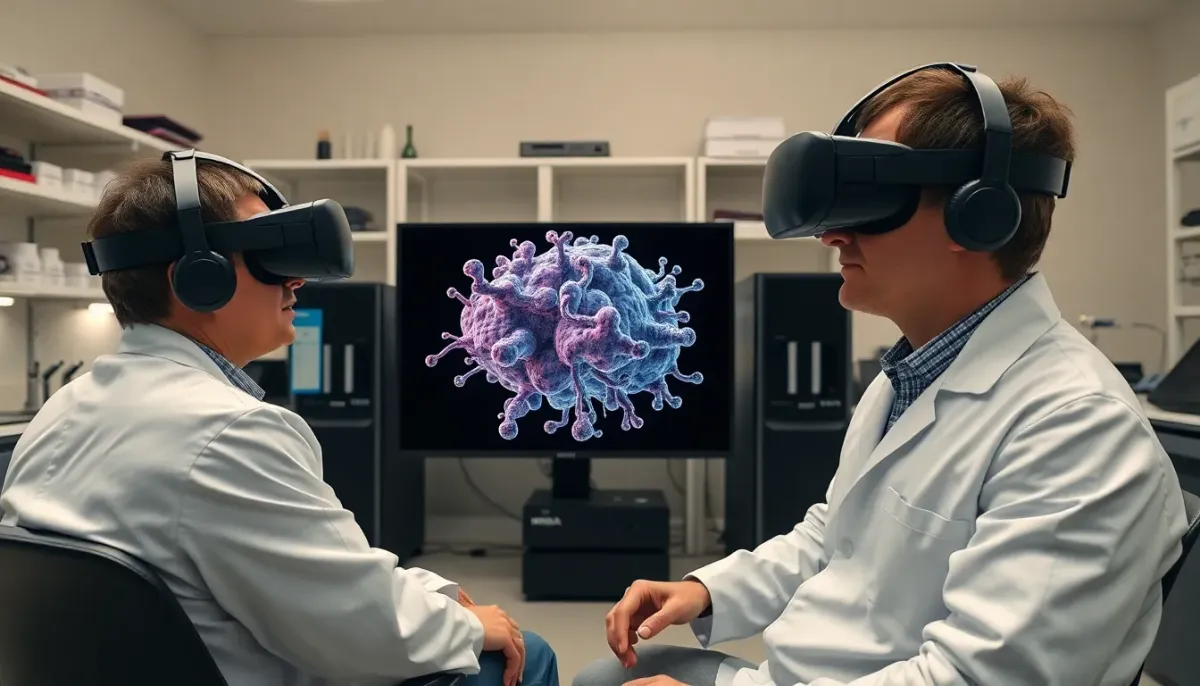
One of the most exciting side effects is the virtual‑reality classroom. Three high‑school interns slipped on VR headsets, entered the digital hippocampus, and began labeling memory‑related proteins. Their task? Sift through billions of neurons to find a few thousand relevant markers. The experience proved so engaging that the researchers are already planning to expand the program to more students across multiple sites 🚀.
The TechLife Perspective: Why This Matters
This isn’t just a hardware upgrade; it’s a paradigm shift in how we study the brain. By marrying AI‑enhanced GPUs, high‑end workstations, and immersive VR, the MBL team turns a painstaking bottleneck into a collaborative, exploratory adventure. For our community, that means faster breakthroughs in neuro‑science, new pathways for education, and a glimpse of how cutting‑edge tech can decode the very essence of memory.
Source: Official Link
Tags :
Share :
Stay Ahead in Tech
Join thousands of developers and tech enthusiasts. Get our top stories delivered safely to your inbox every week.
No spam. Unsubscribe at any time.