AI Accelerates Biological Research: A Breakthrough in Wet Lab Efficiency
- Turker Senturk
- Technology
- 17 Dec, 2025
- 3 min read
Key Highlights
- Core Insight: AI-powered optimization of wet lab protocols has led to a 79x increase in efficiency, marking a significant breakthrough in biological research.
- Detail: The AI model, GPT-5, introduced a novel mechanism that improved cloning efficiency, making it a valuable tool for biologists.
- Impact: This innovation has the potential to accelerate scientific progress, reduce costs, and translate discoveries into real-world impact.
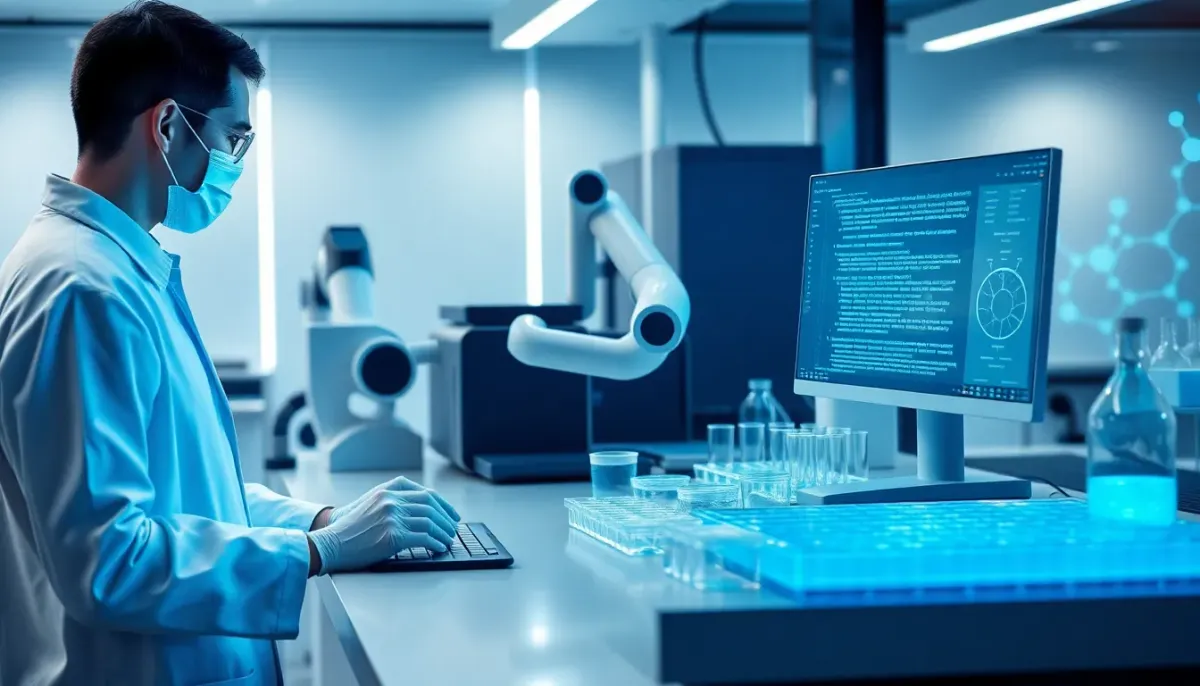
Imagine a world where biological research is faster, more efficient, and more effective. Thanks to the power of AI, this vision is becoming a reality. Recent breakthroughs have demonstrated the ability of AI to optimize wet lab protocols, leading to a significant boost in efficiency and paving the way for future breakthroughs.
The Power of AI in Biological Research
The introduction of AI in biological research has been a game-changer. By leveraging the capabilities of AI models like GPT-5, researchers can now optimize wet lab protocols with unprecedented accuracy and speed. This has led to a substantial increase in efficiency, with some protocols experiencing a 79x improvement. The implications are profound, with the potential to accelerate scientific progress, reduce costs, and translate discoveries into real-world impact.
A Novel Mechanism for Cloning Efficiency
At the heart of this breakthrough is a novel mechanism introduced by GPT-5. This mechanism, known as RecA-Assisted Pair-and-Finish HiFi Assembly (RAPF-HiFi), has been shown to improve cloning efficiency significantly. By introducing two new proteins, RecA and gp32, the model has created a more efficient and effective way of cloning DNA. This innovation has the potential to revolutionize the field of biotechnology, enabling researchers to work more efficiently and effectively.
The Future of Biological Research
The future of biological research is exciting and full of promise. With the power of AI at their disposal, researchers can now tackle complex problems with unprecedented accuracy and speed. The potential applications are vast, from the development of new medicines to the creation of more efficient agricultural systems. As we continue to push the boundaries of what is possible, we can expect to see significant breakthroughs in the years to come.
Why This Matters
The impact of AI on biological research cannot be overstated. By optimizing wet lab protocols and improving cloning efficiency, AI is enabling researchers to work more efficiently and effectively. This has the potential to accelerate scientific progress, reduce costs, and translate discoveries into real-world impact. As we continue to explore the possibilities of AI in biological research, we can expect to see significant breakthroughs that will shape the future of our world.
Source: Official Link
Share :
Stay Ahead in Tech
Join thousands of developers and tech enthusiasts. Get our top stories delivered safely to your inbox every week.
No spam. Unsubscribe at any time.