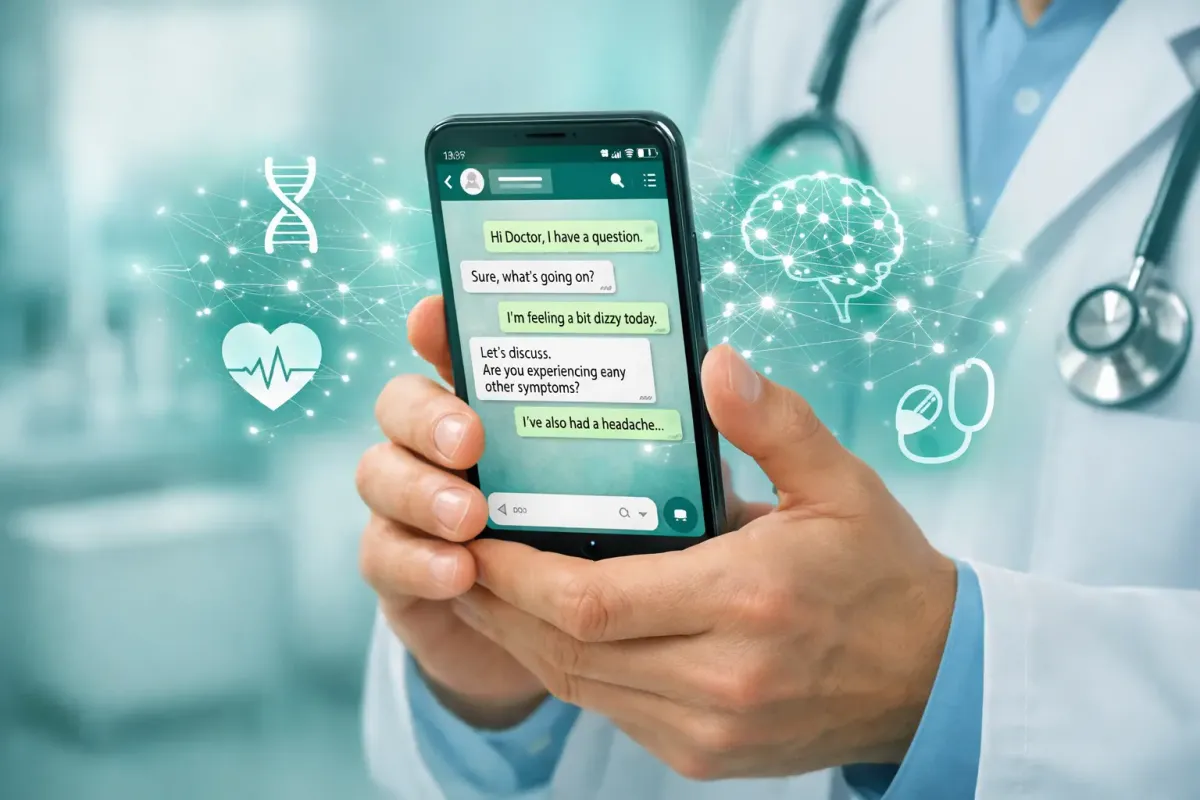
Leona Health Secures $14M to Build the World's First AI Copilot for Doctors on WhatsApp
- Turker Senturk
- AI , Business
- 06 Jan, 2026
- 5 min read
In Latin America, healthcare often begins with a simple WhatsApp message. Patients text their doctors expecting quick responses, much like they would from a food delivery service. But for physicians juggling dozens of patients daily, this communication model has become unsustainable. Enter Leona Health, a startup that just secured $14 million in seed funding to solve this growing crisis with an AI-powered solution built directly into the messaging platform doctors already use.
Tackling the WhatsApp Communication Crisis
The funding round was led by Andreessen Horowitz (a16z), one of Silicon Valley’s most influential venture capital firms. Participation came from General Catalyst (which led the pre-seed round), Accel, and a notable roster of healthcare and fintech executives including Kate Ryder (CEO of Maven Clinic), David Vélez (CEO of Nubank), and Simón Borrero (CEO of Rappi).
Leona Health addresses a unique challenge that exists primarily outside the United States. In Latin America, electronic health record (EHR) adoption sits at just 35%, compared to 90% in the U.S. Without centralized digital systems, doctors have turned to WhatsApp as their primary communication channel with patients. According to the company, 95% of physicians in the region use WhatsApp to run their practices.
This creates an overwhelming situation. A doctor who sees 20 patients during the day might come home to find 100 messages waiting, ranging from serious medical concerns to requests for school letters or appointment receipts. The expectation of immediate responses means physicians are essentially on call around the clock.
How Leona Health’s AI Copilot Works
Leona Health integrates directly with doctors’ WhatsApp accounts while routing all communication through a dedicated mobile app designed specifically for physicians. Patients continue messaging their doctors through WhatsApp as usual, but on the doctor’s side, the experience is transformed.
The AI copilot provides several key capabilities. It automatically categorizes incoming messages by priority, ensuring urgent health concerns rise to the top while routine administrative requests can wait. The system suggests responses based on context, speeding up reply times. Perhaps most importantly, it enables team collaboration, allowing nurses or administrative staff to respond to patients on the doctor’s behalf when appropriate.
The platform also maintains a longitudinal patient record, connecting each exchange to the patient’s history. This gives physicians the context they need without having to remember details from memory or scroll through endless chat threads.
Early users report significant time savings. According to CEO Caroline Merin, doctors using Leona are saving two to three hours per day. One early adopter, Dr. Inés Álvarez, a Mexico City-based physician with over 1,200 patients, says the platform has given her back more than 10 hours each week.
From Uber Eats to Healthcare Innovation
Leona Health’s founder brings an unconventional background to healthcare technology. Caroline Merin spent nearly a decade in the on-demand economy, serving as the first Latin American general manager for Uber Eats before becoming COO of Rappi, the Colombian super-app. She witnessed firsthand how technology could transform consumer expectations around speed and convenience.
That experience informed her vision for Leona. Merin recognized that patients had come to expect the same instant responsiveness from their doctors that they received from delivery apps, but the tools available to physicians hadn’t evolved to meet those expectations.
Joining Merin as co-founders are Tom Chokel and Arela Solis, bringing additional operational and technical expertise to the team. The company currently employs 13 people split between Mexico City and Silicon Valley.
Building Healthcare Infrastructure for an Underserved Market
Andreessen Horowitz general partner Julie Yoo explained the firm’s investment thesis, noting that Leona Health is building a new layer of digital infrastructure for healthcare that starts where people already communicate. By leveraging ubiquitous technology like WhatsApp and combining it with thoughtful design, the startup demonstrates how technology can transform access to care and reshape the patient experience.
The company’s Latin America-first strategy is deliberate. By launching in a region that is still building healthcare infrastructure from the ground up, Leona is designing a care delivery model that can eventually expand globally. WhatsApp’s massive user base of 3 billion monthly active users worldwide suggests significant potential for geographic expansion into other markets where the platform dominates patient-physician communication.
Leona Health emerged from stealth and is now active across 14 countries and supports more than 22 medical specialties. The funding will support continued international growth and deeper automation of non-clinical workflows.
What’s Next: Autonomous Agents and Beyond
The company isn’t stopping at message management. Leona Health plans to soon launch a fully autonomous agent capable of handling conversational scheduling and simple patient intake without any human intervention. This represents a significant step toward the company’s vision of becoming a comprehensive healthcare operating system.
The platform positions itself as core AI infrastructure for modern healthcare delivery, handling the administrative burden so doctors can focus on what they do best: caring for patients.
As Merin puts it, the heart of healthcare is the doctor-patient relationship, but without the right tools, maintaining that human connection comes at a significant cost. By automating the administrative side of medicine, Leona Health aims to scale what matters most: genuine human connection in healthcare.
For physicians in Latin America and eventually around the world, the promise is simple but powerful: reclaim your time, regain control of your practice, and never dread opening WhatsApp again.
Sources:
Share :
Stay Ahead in Tech
Join thousands of developers and tech enthusiasts. Get our top stories delivered safely to your inbox every week.
No spam. Unsubscribe at any time.