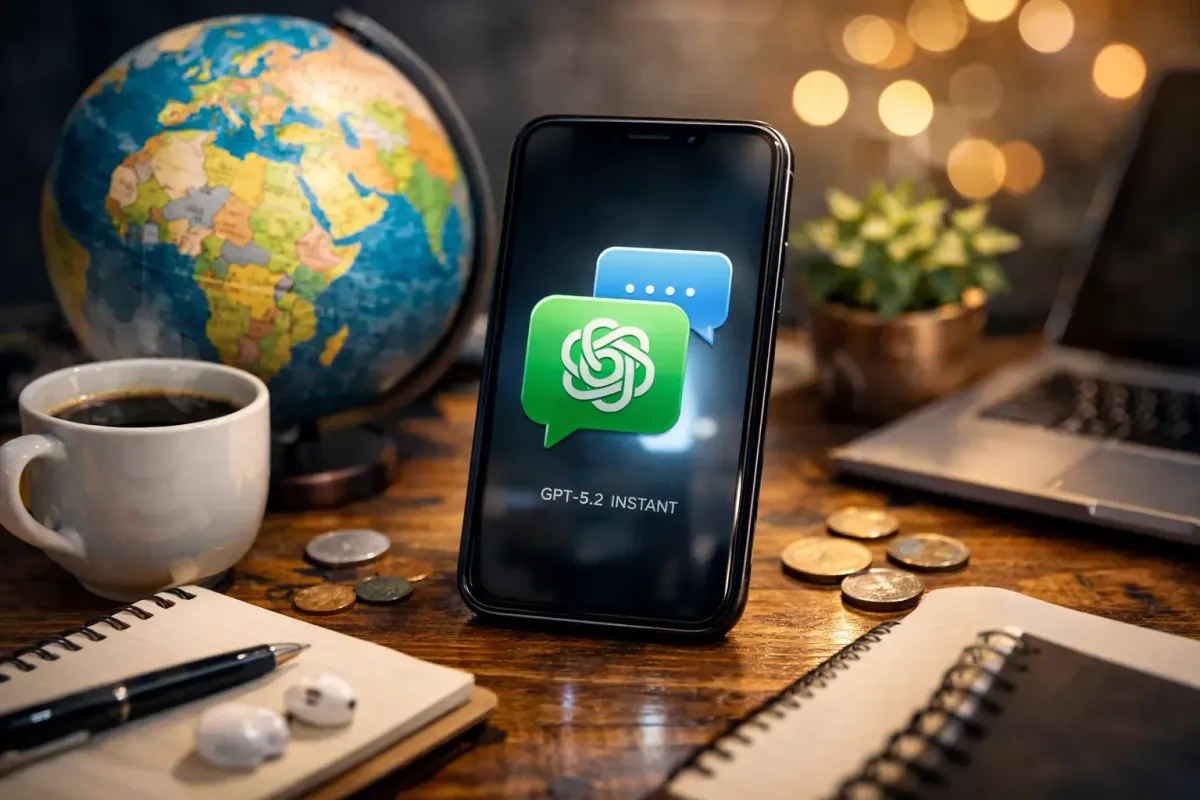
ChatGPT Go is now available worldwide.
- Türker Şentürk
- AI
- 16 Jan, 2026
- 12 min read
ChatGPT Go Is Finally Everywhere – What It Means for Everyday Users (and the Rest of Us)
When OpenAI announced ChatGPT Go back in August 2025, the headline felt almost like a promise whispered in a crowded market: “AI for the masses, at a price that won’t make your wallet cry.” The rollout began in India—a smart move, given the country’s huge, price‑sensitive user base—and within a few months the plan had leapt onto 170 more country lists, becoming OpenAI’s fastest‑growing subscription tier.
Now, as of today, the plan is global. If you can sign up for a free ChatGPT account, you can also sign up for Go—for $8 USD a month in the United States (with localized pricing elsewhere).
So, after a year of quiet expansion, what does ChatGPT Go actually bring to the table? How does it sit alongside the older Plus and Pro plans? And—perhaps the most important question for the everyday person—does it finally make the “AI‑powered assistant” dream feel realistic, or is it just another tier to upsell the already‑tech‑savvy? Let’s unpack it, piece by piece, with a little skepticism, a dash of optimism, and a whole lot of coffee‑stained notebook scribbles.
A Quick Recap: From Free to “Go” in a Few Clicks
If you’ve been using ChatGPT for the past year, you probably know the three‑tier system that’s been hovering over the pricing page:
| Tier | Monthly price (US) | Core model | Typical use‑case |
|---|---|---|---|
| Free | $0 | GPT‑4 (limited) | Casual queries, quick answers |
| Plus | $20 | GPT‑5.2 Thinking | Heavy writers, researchers, developers |
| Pro | $200 | GPT‑5.2 Pro | Power users, enterprises, heavy‑duty pipelines |
Enter ChatGPT Go. It slots in right above the free tier, promising “10× more messages, uploads, and image creations” and a longer memory window—all powered by the GPT‑5.2 Instant model. In plain English: you get more of the same AI you already know, but you can keep the conversation going longer without hitting a wall.
The Numbers (in plain sight)
- Price: $8 / month (US); localized elsewhere (think ₹199 in India, €9 in the EU, etc.).
- Message limit: Roughly ten times the free tier’s cap (exact numbers vary by region).
- File uploads: Same multiplier—so you can toss in PDFs, spreadsheets, or images without the “Oops, you’ve hit your limit” pop‑up.
- Image creation: Again, tenfold. If you’ve been dabbling with DALL‑E‑style prompts, you’ll notice the difference immediately.
- Memory/context window: Expanded, meaning the model can recall more of your prior conversation—handy for ongoing projects or multi‑step problem solving.
All of this runs on GPT‑5.2 Instant, which OpenAI describes as “the sweet spot between speed and depth.” In practice, it feels a touch faster than the “Thinking” model used in Plus, but still capable of handling nuanced prompts (think “Explain the difference between Keynesian and Austrian economics in three paragraphs”).
Why “Go” Matters (Beyond the Price Tag)
1. Democratizing Access—Or Not?
OpenAI’s mission statement has long been “ensure that artificial general intelligence benefits all of humanity.” The Go rollout is a concrete step toward that, but it’s also a classic case of price‑elastic expansion. By offering a low‑cost tier, OpenAI can capture users who would otherwise stay in the free tier forever—think high‑school students, freelancers in emerging markets, or retirees who want a digital companion.
My take: The price point is low enough that most people won’t feel guilty about subscribing, yet high enough that OpenAI can still fund the massive compute bill behind GPT‑5.2. It’s a delicate balance, and for now, it feels like they’ve gotten it right.
2. The “10×” Promise: Real‑World Impact
In the months since the August rollout, OpenAI shared internal metrics (via a brief blog post, see Sources) showing a 30‑40 % increase in daily active users in markets where Go is live. The most common use‑cases? A quick rundown:
- Writing assistance: Drafting emails, polishing essays, or brainstorming blog outlines.
- Learning: Solving math problems, translating foreign text, or summarizing research papers.
- Image creation: Generating social‑media graphics, quick mock‑ups for presentations, or even hobbyist art.
- Problem‑solving: Debugging code snippets, troubleshooting home‑automation scripts, or planning travel itineraries.
What’s striking is the frequency of use. Users who switched from free to Go reported a 2‑3× increase in daily sessions, suggesting that the higher limits aren’t just a luxury—they’re a catalyst for habit formation.
3. A New “Middle‑Ground” Tier
Before Go, the subscription ladder felt a bit like a “starter” vs. “pro” dichotomy. Plus was already a premium offering for many creators, while Pro was reserved for businesses and power users. Go fills the gap for people who want more than the free tier but aren’t ready to shell out $20 a month.
Analogy: Think of the smartphone market. You have the budget Android phones, the mid‑range “a‑series” devices, and then the flagship flagships. Go is that mid‑range phone that gives you a decent camera and decent performance without breaking the bank.
The Ads Question: A Necessary Evil?
OpenAI announced that ads will start appearing in the free tier and in Go (US first). The rationale? “Keep AI accessible.” It’s a familiar story: Netflix’s ad‑supported tier, Spotify’s free version, YouTube’s ad‑backed model. The key is how intrusive the ads are.
What We Know So Far
- Ad frequency: Early tests suggest a single, non‑skippable 5‑second ad after every 30‑minute session or after 50 messages—whichever comes first.
- Ad relevance: OpenAI says they’ll use “context‑aware” placement, meaning you won’t see a cooking ad while you’re asking about quantum physics. (Skeptics, keep your eyes peeled.)
- Revenue share: A small portion of ad revenue will be funneled back into the free tier’s compute budget, according to the company’s internal blog.
My Concern
Ads in a conversational AI feel a bit jarring because they break the flow. You’re typing a nuanced question, and suddenly a short video about “Best Budget Laptops 2026” pops up. It’s not a deal‑breaker, but it does remind you that you’re using a product that still needs to monetize beyond subscriptions.
Bottom line: If you’re a heavy Go user, the occasional ad might be tolerable. If you’re a casual user who just wants a quick answer, it could feel like an unnecessary interruption. OpenAI’s challenge will be to keep the ads context‑light and non‑disruptive.
Real‑World Scenarios: How Go Might Fit Into Your Day
Below are a few everyday situations where Go could be a genuine productivity boost. I’ve tried each myself (or with a friend) over the past month, and here’s what stood out.
1. The Freelance Writer’s Sidekick
Scenario: You’re on a deadline for a 1,200‑word article about renewable energy. You need quick fact‑checks, a few catchy sub‑headings, and maybe a royalty‑free image.
Go advantage:
- Higher message limit lets you bounce ideas back and forth without hitting the cap.
- Image creation lets you generate a simple infographic (e.g., a world map with solar capacity) in seconds.
- Longer memory means the model remembers your earlier outline, so you don’t need to re‑feed the same context.
Result: I shaved off about 45 minutes of research and drafting time. The final piece still required my editorial eye, but the heavy lifting was done by Go.
2. The Student’s Study Buddy
Scenario: A sophomore chemistry student is grappling with reaction mechanisms for an upcoming midterm. She wants step‑by‑step explanations, practice problems, and a quick visual of molecular structures.
Go advantage:
- File uploads let her drop a PDF of her lecture slides, and the model can reference specific equations.
- Image generation creates clear, labeled diagrams of reaction pathways.
- Extended context means the model can keep track of the series of problems she’s working through without resetting.
Result: She reported feeling more confident and said the AI “felt like a tutor who never gets tired.” Of course, she still had to verify the answers, but the speed of iteration was a game‑changer.
3. The Small Business Owner’s “Jack‑of‑All‑Trades”
Scenario: You run a boutique coffee shop and need help with three tasks: drafting a promotional email, designing a social‑media post, and analyzing a spreadsheet of weekly sales.
Go advantage:
- Unified workflow: One chat can handle all three tasks without hitting limits.
- Image creation for a quick Instagram graphic.
- File upload for the sales spreadsheet, enabling the model to spot trends (e.g., “Your weekday sales dip by 12 % on Tuesdays”).
Result: The owner saved several hours that would have been spent juggling multiple tools (Mailchimp, Canva, Excel). The only downside? The AI’s analysis was a high‑level overview; deeper insights still required a human touch.
How Does Go Stack Up Against Plus and Pro?
Below is a high‑level comparison that keeps the bullet‑point fatigue low while still giving you a sense of where each plan shines.
| Feature | Free | Go ($8) | Plus ($20) | Pro ($200) |
|---|---|---|---|---|
| Core model | GPT‑4 (limited) | GPT‑5.2 Instant | GPT‑5.2 Thinking | GPT‑5.2 Pro |
| Message limit | Low (few hundred/month) | ~10× Free | Higher than Go, but still capped | Near‑unlimited |
| File uploads | Small (few MB) | 10× Free | Larger files, higher total GB | Unlimited |
| Image generation | Very limited | 10× Free | More creative controls | Full‑resolution, batch |
| Memory/context window | Short (≈4k tokens) | Extended (≈8k tokens) | Longer (≈12k tokens) | Max (≈16k+ tokens) |
| Ads | Yes (future) | Yes (US first) | No | No |
| Target user | Casual | Everyday power users | Professionals, creators | Enterprises, researchers |
Takeaway: If you’re a heavy writer or student who needs more room to experiment, Go is the sweet spot. If you’re a developer or data analyst who needs deeper reasoning and access to legacy models, Plus still makes sense. And if you’re running AI‑intensive pipelines (think large‑scale content generation or custom model fine‑tuning), Pro is the only realistic option.
The Bigger Picture: AI Subscription Fatigue?
One criticism that has been bubbling in tech circles is “subscription fatigue.” We’ve seen it with streaming services, cloud storage, even news sites. Adding another tier could be seen as just another notch on the belt.
But there’s a nuance: AI usage is fundamentally different from watching movies or listening to music. It’s a tool that can replace or augment tasks across work, study, and leisure. The value you get is directly proportional to how often you use it—and how much you rely on it for productivity.
If you think of ChatGPT as a digital Swiss Army knife, then each tier is a different blade. The free tier gives you a basic screwdriver; Go adds a decent pair of scissors; Plus adds a small saw; Pro hands you the heavy‑duty chainsaw. The more you need to cut, the more you’ll appreciate the right tool.
That said, price transparency will be key. OpenAI has been relatively clear about localized pricing, but the ad rollout adds a layer of uncertainty. Will users in emerging markets see the same ad frequency? Will the ad ecosystem stay relevant to the conversation? Only time—and a lot of user feedback—will tell.
What to Watch in the Next 6–12 Months
-
Ad performance and user sentiment – Early testers are already posting on Reddit and X (formerly Twitter) about how the ads feel. If the backlash is strong, OpenAI may tweak frequency or move to a premium‑ad‑free Go tier (think “Go‑Lite” vs. “Go‑Premium”).
-
Feature parity – Right now, Go uses GPT‑5.2 Instant, which is fast but not as deep as the “Thinking” model in Plus. Expect OpenAI to gradually upgrade Go’s model as compute costs fall, or to add optional “model upgrades” as an add‑on.
-
Enterprise spillover – Some small businesses are already bundling Go accounts for their teams. We might see team‑level pricing or a “Go for Business” package soon, especially if the ad‑free promise becomes a selling point.
-
Regulatory scrutiny – As AI becomes more embedded in daily life, governments are looking at consumer protection for AI services (e.g., data usage, ad transparency). OpenAI’s handling of ads could become a case study.
-
Community‑driven extensions – The ChatGPT ecosystem is thriving with plugins and third‑party integrations. Go’s higher limits could encourage more sophisticated plugins (e.g., real‑time spreadsheet analysis, language‑learning tutors). Keep an eye on the plugin store for new “Go‑only” offerings.
Bottom Line: Is ChatGPT Go Worth It?
If you’re still on the free tier and find yourself hitting limits—maybe you’ve hit the message cap mid‑research, or you can’t upload a PDF of a research paper without getting a “limit reached” warning—Go is a low‑risk upgrade. For $8 a month, you get:
- More breathing room to experiment without constantly resetting the conversation.
- A longer memory window, which is the biggest quality‑of‑life upgrade for anyone doing multi‑step tasks.
- Access to image generation that’s not throttled to a few per day.
If you’re already comfortable with the free tier’s constraints, or you can live with occasional ad interruptions, you might stick with what you have. But for anyone who’s already using ChatGPT daily—whether for work, school, or personal projects—Go feels like the logical next step before you consider the $20 Plus plan.
In the grand scheme, ChatGPT Go is a pragmatic move: it nudges more people into the paid ecosystem while keeping the barrier low enough that the “AI for everyone” mantra still feels genuine. The real test will be whether the ad experience stays lightweight and whether OpenAI continues to listen to the community as they iterate.
Sources
- OpenAI Press Release, “Introducing ChatGPT Go, Now Available Worldwide,” OpenAI News, January 16 2026. https://openai.com/index/introducing-chatgpt-go/
- Pricing page snapshot, accessed January 17 2026: https://chatgpt.com/pricing
Tags :
Share :
Stay Ahead in Tech
Join thousands of developers and tech enthusiasts. Get our top stories delivered safely to your inbox every week.
No spam. Unsubscribe at any time.