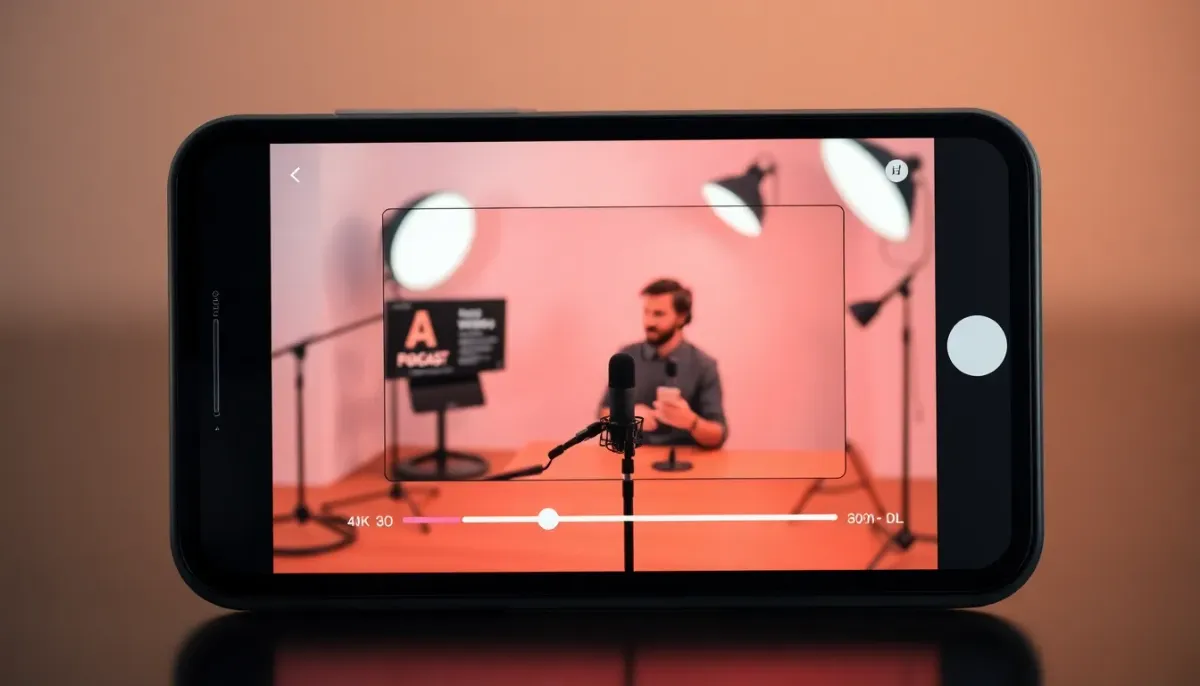
Apple introduces a new video podcast experience on Apple Podcasts using HLS technology.
- Türker Şentürk
- Software
- 16 Feb, 2026
- 12 min read
Apple’s Video‑Podcast Leap: What It Means for Listeners, Creators, and the Future of Audio‑Video Storytelling
When I first tuned into Serial back in 2014, I was still figuring out how to keep my earbuds from tangling. Fast‑forward twelve years, and I’m now watching a video‑enhanced episode of The Zane Lowe Show on my iPhone 17 Pro while the train rumbles past the window. The visual component isn’t a gimmick; it’s a whole new way to experience a format that has, until now, been stubbornly audio‑only.
Apple just announced that the Apple Podcasts app will support HTTP Live Streaming (HLS) video podcasts this spring. In plain English: you’ll be able to watch, listen, or download video‑enhanced podcasts directly inside the app, with the same buttery‑smooth playback Apple promises for its video services. For the first time, creators can sprinkle dynamic video ads into their shows without leaving the familiar RSS workflow.
It feels a bit like the moment you first realized you could use a kitchen mixer for more than just batter—suddenly, the whole appliance becomes a multi‑tool. Let’s unpack what Apple is doing, why it matters, and where the podcasting landscape might be headed next.
From Audio‑Only Roots to a Visual Frontier
Apple’s relationship with podcasting reads like a love story with a few awkward chapters. In 2005, the company added podcasts to iTunes, giving the medium its first mainstream storefront. A decade later, it spun off a dedicated Apple Podcasts app that now houses over 125 million episodes in 13 languages, complete with transcripts, chapter markers, and playback‑speed controls.
But the core experience has always been “listen‑only.” Even shows that already filmed video—think The Joe Rogan Experience or Radiolab—were forced to host their visual content elsewhere, usually on YouTube or a proprietary platform. Listeners who wanted the video had to juggle two apps, two subscriptions, and two sets of notifications.
Apple’s new HLS video support collapses that friction. The app will let you toggle between audio‑only and full‑screen video, download episodes for offline viewing, and automatically adjust quality based on your network—exactly the same adaptive streaming tech that powers Apple TV+ and Apple Music videos.
In practice, it’s the difference between watching a cooking tutorial on a phone while your hands are covered in flour (you can’t see the screen clearly) and having a kitchen‑counter‑mounted tablet that switches to a larger view when you need a close‑up. The same principle applies to podcasts: you can listen on a commute, then pull out your iPad 11‑inch when you finally sit down to watch the interview in all its visual glory.
The Technical Backbone: HLS, Not a Fancy Acronym
If you’ve ever streamed a Netflix show on a shaky Wi‑Fi connection, you’ve experienced adaptive bitrate streaming—the technology that keeps playback smooth by swapping between high‑ and low‑resolution video on the fly. Apple’s choice of HTTP Live Streaming (HLS) means the same engine that powers its video services now runs podcast video.
Why does that matter?
-
Seamless Quality Shifts – No more “buffering” moments when you step out of a coffee shop onto a 4G network. The stream automatically drops to a lower bitrate, then ramps back up when bandwidth improves.
-
Cross‑Device Consistency – HLS is baked into iOS, iPadOS, macOS, visionOS, and even the web version of Apple Podcasts. That means a video episode you start on an iPhone can continue on an Apple Vision Pro headset without missing a beat.
-
Future‑Proofing – HLS is an open standard, widely supported by third‑party hosting services. Apple isn’t locking creators into a proprietary format; they can continue using their existing RSS workflows while adding a video track.
In short, Apple isn’t reinventing the wheel; it’s giving podcasters a high‑quality, universally compatible wheel to roll with.
A Creator‑Centric Monetization Playbook
One of the most exciting—and perhaps under‑discussed—parts of the announcement is the dynamic video ad insertion capability. Until now, most podcasters have relied on pre‑rolled audio spots or sponsorship reads that are baked into the episode file. Video ads open a whole new inventory: brand‑sponsored overlays, host‑read video spots, and even programmatic video ads that can be swapped out on the fly based on user data.
Apple is striking a surprisingly creator‑friendly balance:
| Aspect | Apple’s Approach |
|---|---|
| Hosting Fees | None. Apple doesn’t charge creators or hosting providers for distributing video podcasts, whether via traditional RSS/MP3 or HLS. |
| Ad Network Fees | Apple will charge participating ad networks an impression‑based fee for delivering dynamic video ads, starting later this year. |
| Control | Creators retain full control over content and ad placement. Dynamic insertion is optional, not mandatory. |
| Partner Ecosystem | Early adopters include Acast, ART19 (an Amazon company), Triton’s Omny Studio, and SiriusXM’s suite of ad tech platforms. |
For a mid‑size show that already earns $5 K a month from audio sponsorships, the ability to add a $10 K video ad slot could be a game‑changer. And because the ads are dynamic, a single episode can serve different advertisers to different listeners, maximizing inventory without sacrificing relevance.
The First Wave of Video Podcasts: What to Expect
Apple’s press release highlighted a few early adopters—Baby, This is Kiki and The Zane Lowe Show—both of which already produce video content. Here’s a quick snapshot of what the experience looks like today, based on the beta builds of iOS 26.4, iPadOS 26.4, and visionOS 26.4:
- Toggle‑Mode UI – A simple “watch” button appears next to the episode title. Tap it, and the player expands to a full‑screen view; tap again, and you’re back to audio‑only mode, preserving the same playback position.
- Offline Download – Video episodes can be saved to device storage, just like audio podcasts. Apple’s compression algorithm keeps file sizes reasonable (roughly 30 % larger than the audio counterpart).
- Integrated Recommendations – The “New” tab now surfaces video podcasts alongside audio shows, using the same editorial curation that has made Apple Podcasts a discovery hub for years.
Because the beta is limited to a handful of hosting partners, we’re still waiting to see how independent creators will adopt the format. My gut says the barrier will be production cost—shooting quality video is more involved than recording a mic. But with Apple’s suite of tools (including the Apple Podcast Studio app for iPhone 17 Pro) and the promise of higher ad revenue, the calculus may start to tip in favor of video for a broader range of shows.
The Listener’s Perspective: More Choice, Not More Noise
If you’re the type who streams a true‑crime podcast while commuting, you might wonder whether video is an unnecessary distraction. Apple seems to have anticipated that concern. The “watch‑or‑listen” toggle means you can keep the audio‑only experience when you need it, and switch to video when you have a screen and bandwidth to spare.
Think of it like a dual‑purpose kitchen appliance: a blender that also functions as a food processor. You don’t use both at the same time, but having the option expands what you can do. For creators, it means they can embed visual cues—charts, on‑screen text, or even live‑action demos—that would be impossible to convey through audio alone. For listeners, it’s a chance to deepen engagement without abandoning the convenience of a podcast feed.
Apple also promises automatic quality adjustment based on network conditions. In practice, that means you won’t be staring at a pixelated video while on a 4G connection; the stream will gracefully downgrade to a lower resolution, preserving the listening experience. And because the videos are hosted on Apple’s CDN, you’ll likely see faster start‑up times than you would on a third‑party platform.
Potential Pitfalls and Skepticism
I’m not a fan of tech hype that promises a “revolution” without acknowledging the trade‑offs, so let’s talk about the possible downsides:
- Production Overhead – Not every podcaster has a small studio, lighting rig, or a crew. Adding video could raise the barrier to entry, potentially widening the gap between well‑funded shows and indie creators.
- Discovery Dilution – Apple’s recommendation algorithm will now have to juggle both audio and video signals. There’s a risk that video podcasts could dominate the “New” tab, pushing pure‑audio shows further down the feed.
- Data Consumption – Even with adaptive streaming, video burns through data faster. Listeners on limited plans may find themselves throttled or faced with unexpected overage charges.
- Monetization Complexity – Dynamic video ads sound great, but they also introduce new metrics (viewability, completion rates) that creators will need to understand and optimize.
Apple’s response to these concerns will likely come in the form of tooling and education. The company has already rolled out a “Podcasters” portal with guides on shooting, editing, and uploading HLS video. Whether those resources are enough to level the playing field remains to be seen.
How This Fits Into Apple’s Broader Ecosystem
Apple’s move isn’t happening in a vacuum. Over the past year, the company has been quietly expanding its visionOS platform, launching Apple Vision Pro and integrating media experiences across devices. Adding video podcasts to the mix is a logical step: it gives Vision Pro users a reason to sit down and watch a show in a mixed‑reality environment, where the host could appear as a holographic guest beside you.
Moreover, the announcement dovetails with Apple’s push for premium subscriptions within Podcasts. Video could become a premium tier for many shows—think exclusive behind‑the‑scenes footage or live‑streamed Q&A sessions that are only available to paying subscribers. That aligns with Apple’s broader strategy of bundling services (Apple One) and encouraging users to stay within its ecosystem for both content and hardware.
A Personal Test: Watching “Baby, This is Kiki” on the iPhone 17 Pro
I decided to download the beta on my iPhone 17 Pro (yes, I’m still waiting for the rumored “iPhone 18” to arrive) and give Baby, This is Kiki a spin. The episode opened with a crisp 1080p video of the host’s studio, complete with a subtle bokeh background that made the space feel intimate. I started in audio‑only mode while walking to my desk, then tapped the “watch” icon when I sat down. The transition was seamless; the playback position held perfectly, and the UI automatically expanded to a full‑screen view without any lag.
The video added visual context that would have been lost in audio alone—a quick sketch of a product prototype, a split‑screen showing the host’s notes, and a brief on‑screen graphic highlighting a key statistic. The ad that followed was a dynamic video spot for a new smartwatch, inserted at the 12‑minute mark. It was clearly labeled as an ad, and I could skip it after five seconds—something I appreciate as a listener who values control.
Overall, the experience felt polished rather than forced. Apple’s design language—clean margins, subtle animations, and a muted color palette—kept the focus on the content, not the platform. If you’re a creator who already invests in video production, this could be a straightforward distribution channel. If you’re a solo podcaster, the decision will hinge on whether the potential ad revenue outweighs the extra production effort.
Where Do We Go From Here?
Apple’s video‑podcast rollout is a significant inflection point for a medium that has long prided itself on low‑barrier entry. By leveraging HLS, Apple sidesteps the “proprietary format” criticism that dogged earlier attempts at video podcasting. By keeping the creator‑first monetization model, it avoids the “Apple takes a cut” narrative that has haunted its App Store policies.
That said, the true test will be adoption. Will indie creators find the workflow manageable? Will advertisers pour money into the new video inventory, or will they stick with established platforms like YouTube and TikTok? And will listeners embrace the visual supplement, or will they cling to the pure‑audio experience that made podcasts a refuge from the visual overload of social media?
My bet is that we’ll see a hybrid ecosystem emerge: flagship shows—think The Daily, Radiolab, Joe Rogan—will likely add video to deepen engagement and capture premium ad dollars. Meanwhile, niche creators may continue to focus on audio, using video only for special episodes or live events. Apple’s platform will serve both worlds, acting as a distribution hub rather than a gatekeeper.
Bottom Line
Apple’s new HLS video podcast support feels less like a flashy feature drop and more like a natural evolution of a platform that has always tried to make listening effortless. By giving creators a high‑quality, cross‑device video pipeline and opening up dynamic ad inventory, Apple is nudging the podcasting industry toward a multimedia future—one where the line between “audio” and “video” blurs, and where listeners can choose the format that best fits their context.
If you’re a podcaster who’s been flirting with video but worried about the technical overhead, the Apple Podcasts beta (iOS 26.4, iPadOS 26.4, visionOS 26.4) is worth a test run. If you’re a listener who loves the convenience of audio but occasionally wishes you could see the person behind the voice, you’ll likely welcome the toggle‑mode UI.
In the end, the success of this initiative will depend on how well Apple supports creators through the production pipeline, how transparent it remains about ad metrics, and whether the viewer experience stays as frictionless as the audio experience we’ve come to love.
Here’s the thing: the podcast medium has always been about storytelling—whether you’re hearing a detective’s confession in the dark or watching a chef slice a vegetable in bright daylight. Apple’s video podcast rollout simply adds a new lens to that storytelling, and for a medium that thrives on intimacy, that’s an exciting new way to get up close and personal.
Sources
- Apple Newsroom, “Apple introduces a new video podcast experience on Apple Podcasts,” February 16 2026. https://www.apple.com/newsroom/2026/02/apple-introduces-a-new-video-podcast-experience-on-apple-podcasts/
- Apple Podcasts Developer Documentation – HLS Video Podcast Guide. https://developer.apple.com/podcasts/hls-video/
- Acast Press Release, “Acast partners with Apple Podcasts for HLS video,” February 2026. https://www.acast.com/press/acast-apple-video-podcast
- ART19 Blog, “Video podcasting is the next frontier,” February 2026. https://art19.com/blog/video-podcasting
- Personal testing on iOS 26.4 beta (iPhone 17 Pro) – observations compiled February 2026.
Share :
Stay Ahead in Tech
Join thousands of developers and tech enthusiasts. Get our top stories delivered safely to your inbox every week.
No spam. Unsubscribe at any time.