AI Training vs Inference: Why 2025 Changes Everything for Real-Time Applications
- Turker Senturk
- AI
- 23 Dec, 2025
- 9 min read
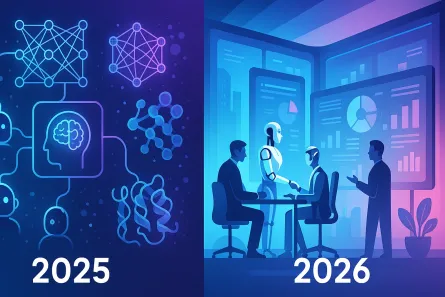
The AI landscape is experiencing a fundamental shift. After years of focusing on training massive models, the industry is pivoting toward inference — the phase where trained models actually do useful work. This isn’t just a technical change; it’s an economic revolution that will reshape data centers, business models, and how we think about AI infrastructure.
What Makes Training and Inference Different?
Think of AI development in two distinct phases. Training is like going to medical school — an intense, expensive, one-time investment where you learn everything. Inference is like practicing medicine — you use what you learned millions of times, every single day.
Training: The Learning Phase
During training, AI models consume enormous datasets and adjust billions of parameters to minimize errors. This process is brutally compute-intensive. OpenAI’s GPT-3 required approximately 3,640 petaflop-days of computation — equivalent to running a high-end smartphone non-stop for 100,000 years.
Training typically happens in remote data centers packed with hundreds or thousands of GPUs. These facilities can handle power densities of 100-200 kW per rack (sometimes reaching 1 MW for frontier systems). Because training isn’t time-sensitive, companies can locate these “bit barns” wherever electricity is cheap and abundant, tolerating latencies of up to 100 ms between regions.
Inference: The Deployment Phase
Once trained, a model’s weights are frozen, and it starts making predictions on new data. Every ChatGPT query, every Netflix recommendation, every fraud detection check — that’s inference. Unlike training’s one-time expense, inference runs continuously, potentially billions of times per day.
Real-time inference demands millisecond-scale responses. This forces a completely different infrastructure approach: lower power density (30-150 kW per rack), deployment close to users, and hardware optimized for quick responses rather than raw computational power.
The Big Comparison: Training vs Inference
Here’s how the two phases stack up across critical dimensions:
| Dimension | Training | Inference |
|---|---|---|
| Purpose | Learn patterns from data | Apply learned patterns to new data |
| Timing & Frequency | Before deployment; executed once or periodically | Continuously after deployment, potentially millions of times per day |
| Data Requirements | Large labeled datasets covering wide scenarios | Single data points or small batches without referencing training data |
| Compute Intensity | Extremely high; GPT-3 demanded 3,640 petaflop-days | Moderate to low; one request uses tiny fraction of training compute |
| Hardware Needs | High-end GPUs/TPUs, massive memory, high-bandwidth storage, low-latency interconnects | CPUs, consumer GPUs, mobile processors, or specialized inference accelerators |
| Cost Structure | High upfront CapEx; one-time or periodic | Lower per request but ongoing OpEx; accumulates with usage |
| Latency Sensitivity | Not critical — can run offline for days/weeks | Critical — real-time apps need millisecond responses |
| Scalability | Horizontal across large GPU clusters | Horizontal across many inference servers and edge devices |
Why 2025 Is the Tipping Point
Several converging trends are making 2025 the year inference overtakes training as the dominant AI workload:
1. Training Costs Are Plummeting
The economics of model training have shifted dramatically. DeepSeek V3, released in January 2025, achieved GPT-4-level performance for just $5.6 million — less than 5% of what US competitors spent. Meanwhile, GPT-4’s training reportedly exceeded $100 million.
Open-source models like Llama 3.1 now match closed models on approximately 90% of benchmarks for a fraction of the cost. As models become commoditized, the economic value shifts from building the brain to using it.
2. Inference Volumes Are Exploding
Every user interaction generates inference requests. Consider the math: 100 million requests per day at $0.002 per request equals $73 million annually in inference costs alone.
According to industry analysts, inference accounts for 80-90% of total AI lifetime costs because every prompt incurs compute. Gartner projects the AI inference market will reach $250-350 billion by 2030, growing at nearly 20% annually. The global inference market stands at approximately $106 billion in 2025 and is projected to hit $255 billion by 2030.
3. Real-Time Applications Demand It
Voice assistants, fraud detectors, recommendation engines, autonomous vehicles, and dynamic chatbots all require instantaneous responses. Training might be a one-time expenditure, but inference happens billions of times daily. As user expectations for personalization grow, businesses must deploy models closer to end users.
4. Infrastructure Is Evolving
Legacy centralized cloud platforms struggle with latency, scaling, and cost for real-time inference. A 2025 Forrester study found that 56% of developers face latency issues, 60% struggle with storage/processing costs, and 45% have scaling difficulties.
The solution? Distributed and edge computing architectures that serve data from locations closer to users. More than half of surveyed developers now self-manage some form of distributed architecture.
The Cost Reality: CapEx vs OpEx
Training: Big Upfront Investment
Training costs are substantial but predictable:
- GPU rental: $2-$10 per GPU-hour on cloud platforms
- Moderate models: $10,000-$100,000 to train
- State-of-the-art models: Millions of dollars
- GPT-4: Over $100 million
These are capital expenditures — you pay once (or occasionally for retraining) and move on.
Inference: Death by a Thousand Cuts
Inference costs per request seem tiny:
- CPU-based inference: $0.0001-$0.001 per request
- GPU-accelerated inference: $0.001-$0.01 per request
- Large language model APIs: $0.002-$0.06 per 1,000 tokens
But these costs are relentless. High-traffic applications quickly see expenses spiral. Unlike training infrastructure that can be shut down between jobs, inference servers must run continuously to ensure low-latency responses. Global deployments require replicating infrastructure across multiple regions, multiplying costs further.
Why Inference Costs Exceed Training
Four factors drive inference costs above training costs:
- Frequency disparity: One model training session versus billions of inference calls
- Always-on infrastructure: No downtime allowed for real-time apps
- Latency requirements: Maintaining excess capacity for traffic peaks
- Geographic distribution: Replicating infrastructure across regions
Smart organizations mitigate these through model optimization (quantization, pruning, distillation), batch processing when possible, response caching, right-sized hardware, and reserved cloud capacity that can reduce costs by 40-70% compared to on-demand pricing.
Infrastructure Revolution
Two Distinct Architectures Emerge
The divergence between training and inference is reshaping data center design:
Training Clusters:
- 100-200 kW per rack (up to 1 MW for frontier systems)
- Advanced liquid cooling systems
- Remote, power-rich locations
- High latency acceptable
Inference Clusters:
- 30-150 kW per rack
- Repurposed hardware optimization
- Co-located with storage and applications
- 2N redundancy for minimal downtime
- Urban proximity for low latency
The Investment Wave
Morgan Stanley estimates global data center capacity must grow six-fold by 2035, requiring roughly $3 trillion in investment between 2025 and 2028. This shift expands the beneficiary ecosystem beyond GPUs to include memory, storage, and server infrastructure providers.
Breaking the GPU Monopoly
Inference workloads don’t need the same hardware as training. New accelerators are emerging:
- Google Coral: Edge inference optimization
- NVIDIA Jetson: Embedded AI computing
- Apple Neural Engine: On-device AI processing
- FPGAs and TPUs: Customizable parallelism
These power-efficient alternatives threaten the GPU monopoly for inference workloads.
Real-World Applications Driving Demand
Natural Language Processing
Every ChatGPT prompt, content moderation check, or real-time translation triggers inference through trained models. These systems must respond in seconds, processing streaming text and audio continuously.
Computer Vision and Autonomous Systems
Tesla’s Full Self-Driving models are trained on billions of video frames but continuously perform inference to navigate roads, recognize obstacles, and respond to real-time conditions. Industrial inspection, medical imaging, and surveillance systems similarly require low-latency inference for defect detection and diagnostics.
Recommendation Engines
Netflix and TikTok train recommendation models on vast user histories, then execute billions of inference calls daily to generate personalized content. E-commerce sites, social networks, and fintech apps rely on inference to recommend products, detect fraud, and adjust prices in real time.
Agentic AI Systems
The next frontier is agentic AI — systems capable of real-time planning, reasoning, and executing multi-step workflows. These autonomous agents will handle complex tasks in logistics, finance, and customer service, requiring inference infrastructure that maintains context across extended interactions with large memory footprints.
Strategic Implications for Organizations
Rethink Cloud Strategy
Organizations must balance central management with decentralized execution. This means:
- Deploying micro-data centers near users
- Leveraging edge nodes strategically
- Adopting standardized tools and security practices
- Planning for compliance across distributed architectures
Optimize for Efficiency
Continuous inference operations strain energy grids. Data center power demand is forecast to triple from ~30 GW in 2025 to 90 GW by 2030. Sustainability requires:
- Energy-efficient chips
- Liquid cooling systems
- Renewable power sources
- Waste-heat reuse programs
Embrace the Inference Economy
The business model is shifting from training-centric to inference-centric. Revenue streams tie directly to real-time usage — each query or prediction can be monetized. As open-source models reduce software costs, usage volumes explode, boosting demand for inference infrastructure.
The Bottom Line
The AI industry is entering an inference-heavy era. Falling training costs, explosive prediction volumes, stringent real-time requirements, and new business models are shifting massive investment toward inference-optimized infrastructure.
By 2025 and beyond, compute resources will migrate from remote training campuses to distributed, low-latency data centers and edge devices. The infrastructure supporting real-time inference won’t just power chatbots and recommendations — it will underpin autonomous systems, personalized medicine, and everyday interactions, making it the center of AI’s economic and technological future.
Organizations that optimize models, embrace distributed architectures, invest in energy-efficient hardware, and plan for continuous operational costs will be best positioned for this shift. The training phase taught AI systems how to think. Now comes the real work: thinking billions of times a day, everywhere, instantly.
Sources
- AI Training vs Inference: Key Differences, Costs & Use Cases [2025]
- The next big shifts in AI workloads and hyperscaler strategies | McKinsey
- What is AI Inference? Key Concepts and Future Trends for 2025 | Tredence
- Training vs. Inference: The $300B AI Shift Everyone is Missing
- AI 2025 Predictions: 9 Key Trends Shaping the Future of AI | SambaNova
- Why AI Inference is Driving the Shift from Centralized to Distributed Cloud Computing | Akamai
- AI Enters a New Phase of Inference | Morgan Stanley
Share :
Stay Ahead in Tech
Join thousands of developers and tech enthusiasts. Get our top stories delivered safely to your inbox every week.
No spam. Unsubscribe at any time.